
Insomnia
Importance of Sleep
“Sleep is the overlooked hero and the poor man’s physician”
You may ask why we spend nearly a third of our lives sleeping. We are biologically wired to sleep. Sleep has been shown to be vital for our existence. Unfortunately, many of us do not get the sleep we need. After many restless nights, you may be concerned about having insomnia. But what is insomnia exactly?
Insomnia is a common sleeping disorder that leads to negative daytime effects despite adequate opportunity to sleep. It is characterized by difficulty falling asleep, maintaining sleep, or experiencing non-refreshing sleep. Up to 30 to 40% of Americans have experienced symptoms of insomnia. For some, symptoms of insomnia can resolve on its own or due to changes in the sleep environment or sleep behaviors. However, roughly 10% of the adult population suffer from chronic insomnia, defined as lasting for at least 3x per week for 3 or more months. Chronic insomnia may require evaluation and treatment.
Truth or Myth?
During sleep, the brain is not active.
The answer is....
Myth! During sleep, the brain remains online and active. We cycle through different sleep stages with corresponding brain activity. For more information, check out Healthy Sleep. The active brain during sleep plays a role in memory, thinking, and emotional processing.
A compilation of individuals tossing and turning experiencing a restless night
Many restless nights can make it difficult for you to live an enjoyable and productive life. Chronic insomnia may feel unsolvable. Despite the negative consequences of sleeping disorders, many people remain undiagnosed and do not receive treatment. It is important that you know the characteristics of insomnia and when to reach out for help
What Causes Insomnia
Theories That Explain Insomnia
Sleep researchers and experts continue to investigate what leads to the development of insomnia. It is well-known that insomnia often occurs in the setting of various social stressors (e.g., personal loss, social disruption), mental and physical health problems (e.g., heart disease, depression) and in those with a family history of the condition (see Risk Factors for Insomnia). However, this does not explain why insomnia actually occurs. There are several theories that have been proposed to explain its basis.1,2 One common theory suggests that insomnia is a state of “hyperarousal” where affected persons are physiologically and mentally activated. Studies in persons with insomnia have found increased heart rates, elevations in the stress hormone cortisol or greater amounts of fast brain activity around sleep onset. However, not all persons with insomnia exhibit evidence of “hyperarousal”. Another theory proposes that insomnia is related to a problem with the control of sleep and wakefulness. There are a number of biological pathways that have been shown to be important in governing sleep and wakefulness. If some of these pathways are disturbed, insomnia may develop. Advanced imaging and electroencephalographic techniques have shown that there are differences in brain function between persons with and without insomnia. Unhelpful behaviors and thoughts also are thought to be related to the development of insomnia. This is one of the principles underlying the use of cognitive behavior therapy for insomnia (see Behavioral Treatments for Insomnia). The figure below incorporates some of the more common factors proposed to explain the development of insomnia. As more knowledge is uncovered regarding the development of insomnia, this framework will evolve.
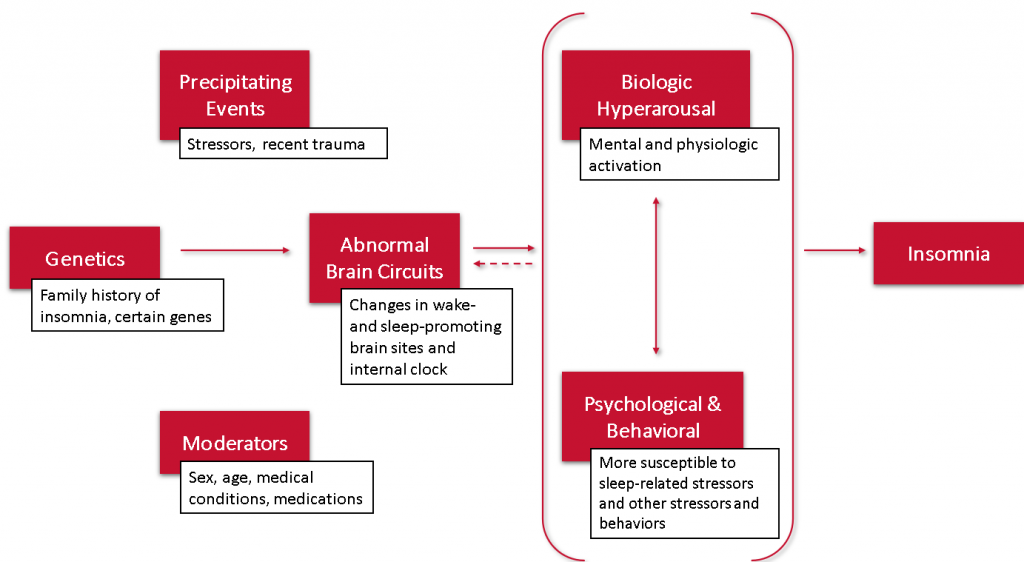
The 3 P’s of Insomnia
Many of the theoretical concepts used to explain the mechanisms underlying the development of insomnia can be summarized in a model proposed by Dr. Arthur Spielman in the 1980’s. This model includes three key factors that contribute to insomnia: predisposing, precipitating, and perpetuating factors.3
Predisposing factors
Predisposing factors includes factors that are often out of our control, like our age and genetics, that make us vulnerable to sleeping problems. Lifestyle issues and medical conditions may be predisposing factors as well. Although predisposing factors may increase your risk of insomnia, it is not enough to cause insomnia. See Risk Factors for Insomnia for more information.
Precipitating factors
Do you find it more challenging to get restful sleep when you are stressed out or worried about an upcoming deadline? Precipitating factors are circumstances that trigger the first few nights of insomnia. It could be a stressful life event, a recent trauma, or medical treatments or conditions. Any event or activity that can make it more difficult to sleep at night may be a precipitating factor for insomnia.
Perpetuating factors
In some persons with insomnia, they lay awake spending too much time in bed trying to fall asleep. Eventually, they begin to associate the activity of going to bed and the bedroom itself with wakefulness and frustration about not sleeping. This results in a vicious cycle by which attempting to sleep leads to worse insomnia, and therefore results in a perpetuation of the problem. This can be worsened by poor sleeping behaviors such as reading with an eReader, using a smartphone, taking a nap or drinking coffee near bedtime. (See In the Modern Era)
Symptoms of Insomnia
The Takeaway
Insomnia is a report of difficulty falling asleep, staying asleep at night, or waking up too early. It is associated with impairment in daytime functioning.
Chronic insomnia must be present for at least 3 months and last for 3 or more days of the week. In contrast, acute or transient insomnia will last for only a few days or weeks. However, you can reach out to your provider as early as a month with persisting symptoms. Insomnia is a report of difficulties with one or more of the following:
- Lying awake in bed for a long time before sleep. More common in young adults.4
- Fragmented sleep. More common in older adults. There may be more frequent mid-sleep waking throughout the night or time lying awake in bed.4
- Early wake-time with an inability to go back to sleep.
- Lack of quality sleep leading to feelings of being unrested, fatigued, irritable, depressed, and reduced ability to concentrate and perform daytime activities.
- Symptoms persist despite using common strategies to improve sleep see Healthy Sleep Tips
These symptoms are present even when you have the appropriate time and place to sleep. This differs from sleep deficiency. See below for more information.
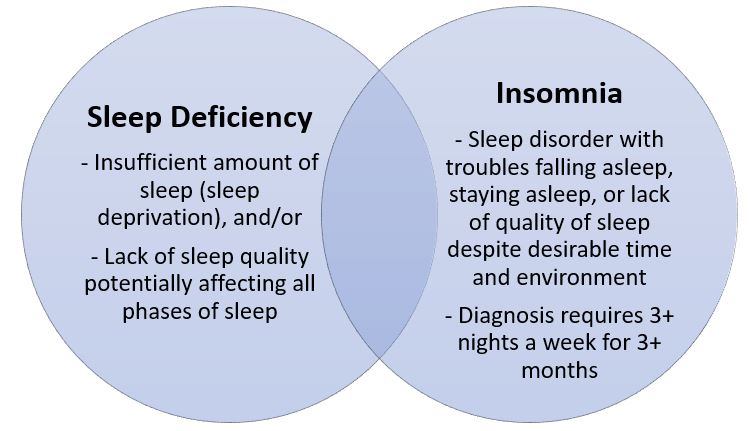
Know the Difference
Although sleep deficiency and insomnia are used interchangeably, they are not the same. For insomnia, these symptoms are present even when you have the appropriate time and place to sleep. Although fatigued and tired, persons with insomnia are generally unable to nap during the day. This differs from sleep deficiency, which is an inadequate amount of sleep because of lack of time to sleep or a personal decision not to sleep. Sleep deficiency may be caused by an acute stressor like travel or an upcoming deadline that reduces the amount and quality of sleep. Persons who are sleep deficient will easily fall asleep when given the opportunity to do so.
Risk Factors for Insomnia
The Takeaway
The major risk factors for insomnia are advancing age, family history of insomnia, female sex, lifestyle, and stress or worrying.
Insomnia is a common condition with several risk factors. Some are inherited, while others are the result of aging and/or lifestyle4,5. Do any of these risk factors apply to you?
- Advancing age: the risk of insomnia increases as you age.
- Family history of insomnia: your genetics can predispose you to insomnia and influence the depth of your sleep.
- Sex: women are more likely to have insomnia than men.
- Lifestyle: certain habits can increase the risk of insomnia. Some examples include taking long naps near bedtime, drinking excessive caffeine or alcohol or inhaling nicotine from smoking, and having an irregular sleep schedule.
- Stress or worry: stress and worry about sleep or daily life can raise the risk of insomnia. As described by Dr. Drew Faust, the vicious cycle of losing sleep and worrying about sleep led to her insomnia worsening.
- Medical and psychiatric disorders: medical disorders such as heart disease and asthma, and psychiatric disorders such as depression and anxiety are often associated with insomnia.
Insomnia and Social Factors
The social and physical environmental conditions in which people work, play, and live are factors that influence sleep duration and risk of sleep disturbances.6 Insomnia symptoms occur more frequently in poorer neighborhoods and those with higher crime rates. In addition, those persons living in urban areas are exposed to more nighttime light exposure, which negatively impacts melatonin release and the timing of their circadian rhythm leading to poorer sleep. Thus, where you live, learn, work and play impact your sleep.
Individuals with lower socioeconomic status and persons of color also have higher rates of insomnia. A major factors explaining this finding are health disparities, e.g., higher likelihood of other health conditions and living in poorer neighborhoods.
Faces of Insomnia
The Takeaway
Insomnia can impair decision-making, decrease concentration, and make it more difficult to control your emotions.
Narratives of Insomnia
Insomnia is common. Many individuals, including celebrities, struggle with insomnia. Some celebrities you may know include George Clooney, Jennifer Aniston, and Mariah Carey. If you’re interested in learning more about their struggles, click here.
“Sleep is a tough one for me. My one key tip is to sleep with my phone at least five feet away from me.” – Jennifer Aniston
There are some nights when sleep plays coy, aloof and disdainful. And all the wiles that I employ to win its service to my side are useless as wounded pride, and much more painful.” – Maya Angelou
Below are three patient stories of their life with insomnia.
Margaret shares her battle with insomnia and how she is “tired of being tired.”
Former NBA superstar Ray Allen shares how poor sleep leads to headaches.
Dr. Drew Faust, 28th President of Harvard University, shares the impact of her insomnia on her life and daily functioning.
Health Consequences
The Takeaway
-
Studies show that insomnia is a risk factor for depression, poorer concentration, and memory problems.
-
Some evidence also suggests that insomnia is related to heart disease and earlier death3.
Depression
Many individuals struggle with depression. It impacts one’s ability to think, feel, and handle daily activities well. Depression often includes sad feelings and a loss of enjoyment in life events. Studies have shown a close relationship between the regulation of sleep and that of mood.7 Chronic insomnia is a risk factor for the development of depression; insomnia can occur as a result of depression. Watch Dr. Suzanne Bertisch describe the close relationship between insomnia and depression.
Cognitive Function
It is no surprise that insomnia can decrease the ability to think clearly. Studies have shown that individuals with insomnia show declines in cognitive performance with short-term memory, attention, and some more complex brain functions like the ability to speak clearly.8
Cardiovascular Health & Lifespan
Although the link between insomnia and depression is more pronounced, studies suggest that insomnia can be associated with an increased risk of heart disease and a shortened lifespan.9 Emerging research in this area suggests that insomnia can put the body in a proinflammatory state.

Personal and Societal Consequences
The Takeaway
Insomnia can significantly reduce quality of life, while decreasing work productivity, increasing sick time, and lead to more car crashes.
Personal Consequences
Daytime impairment is a key component to diagnosing insomnia. Persons with insomnia may experience fatigue, anxiety, irritability, decreased ability to concentrate, and inability to perform complex tasks. They also have greater difficulties with relationships between family members, friends and others. Insomnia has been associated with decreased work productivity and more absenteeism with a greater usage of health care services4,5.
Societal Consequences
As a result of its daytime effects, persons with insomnia are less productive and have greater absenteeism. They are also at greater risk of developing medical problems including falls and hip fractures, which affect productivity levels, increase health care utilization, and add to the economic costs to society. Additionally, the risk of motor vehicle accidents is increased among those with insomnia6.
Estimate of how much chronic insomnia pulls down the U.S. economy, according to researchers at RAND and RAND Europe.
David describes his wife’s insomnia and its impact on him.
In The Modern Era
Modern technology has led to an increase in consumer sleep technology (CST). Various forms include sleep tracking applications and wearable devices. Most CST devices are not FDA-approved. None of these have been adequately tested among patients with insomnia. As such, these tools should not be used as substitutes for medical evaluation.1 However, CSTs can be used to provide additional information to enhance the patient-provider interaction.
The American Academy of Sleep Medicine (AASM) summarizes the advantages and disadvantages of CST in the chart below10:
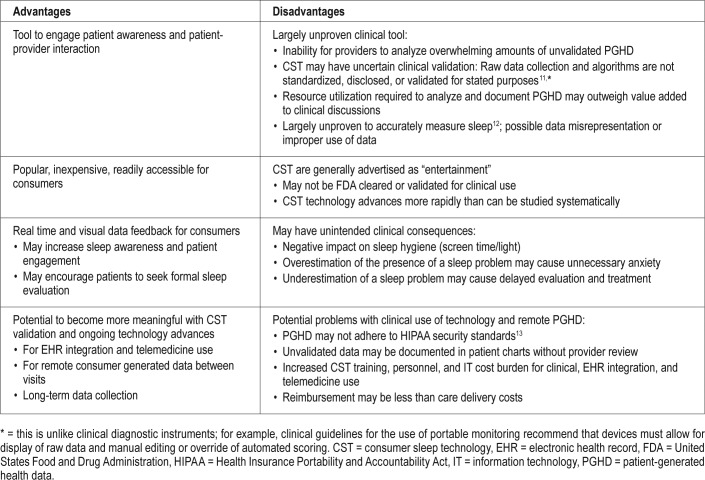
Table courtesy and permission provided by Journal of Clinical Sleep Medicine. Access article at: https://doi.org/10.5664/jcsm.7128.
Light Exposure Before Bedtime
Light exposure especially from electronic devices close to bedtime can disrupt your circadian rhythm. The circadian rhythm is the body’s internal clock that either signals alertness or prepares you for rest. Light inhibits the secretion of the hormone melatonin from the pineal gland in the brainstem. Melatonin is the signal to the internal clock that it is time to sleep. Blue enriched light which radiates from electronic devices is particularly effective in delaying melatonin secretion. Research has shown that use of electronic devices delays the onset of sleep and can be a factor in precipitation or perpetuation of insomnia.
Dr. Charles Czeisler describes how electronic reading devices can worsen sleep.
Sleep Tracking Devices
Technology has increased the amount of sleep data available to the individual. A recent study of healthy participants showed a sleep tracking application to sufficiently measure sleep and heart rate variables.11 More ongoing studies are assessing the efficacy and benefits of using sleep tracking applications for sleep disorders.12
Sleep tracking devices often contain a sensor (accelerometer) that records your movements. This accelerometer is the essential component of an actigraph (watch video on actigraphy), a device which sleep specialists and researchers use to estimate sleep patterns over extended periods of time. Generally, it interprets your lack of movement as “sleep” and movements like tossing and turning as “awake.” These devices can provide sleep information in your natural sleep environment. However, the data from these devices and other CSTs should be considered as only estimates of one’s sleep. They should never be used instead of clinical interviews, sleep diaries, or overnight sleep studies when indicated.
Self-Evaluation
When should I talk to my healthcare provider?
Let’s say you have already tried to improve your sleeping behaviors, assessed ongoing life changes, managed your stress, and created an ideal environment to sleep. However, you continue to experience symptoms of insomnia for over a month. This is when you may consider reaching out to your healthcare provider. If you experience declines in your daytime functioning from trouble falling asleep, staying asleep, and/or wake up earlier than you wish without an ability to fall back asleep, inform your healthcare provider.
What to say and bring to your appointment?
To make the most out of your visit, make a list of things to discuss with your provider. If s/he suggests that you take a sleeping medication, ask about non-drug options. Tell your provider if you have any other problems with your sleep such as snoring or difficulty staying asleep because of an urge to move your legs.
You can also start a sleep diary to take note of any sleeping behavioral changes you have made. It can be as simple as jotting down sleep and sleep-related activities at the end and beginning of your day. If you stopped watching TV an hour before bedtime, write it down. If you started taking an over-the-counter sleeping pill before bedtime, write that down. Also make sure to write down any questions or concerns you may have to discuss with your provider.
Questionnaires
Before your appointment, there are some questions to ask yourself. For general sleep concerns, take this brief yes-or-no Sleep Disorders Screening Survey. If you experience symptoms of insomnia, the Insomnia Severity Index can assess insomnia.
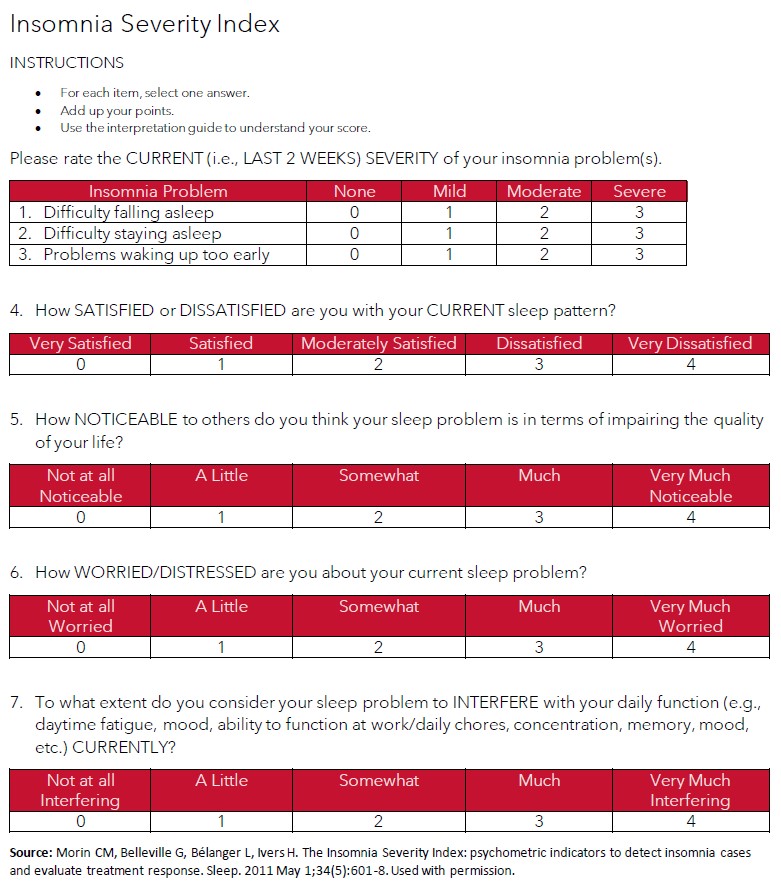
Interpretation
If you respond “Yes” to two or more of the statements in the Sleep Disorders Screening Survey, you may have symptoms consistent with a sleep disorder. We strongly advise you to discuss these sleeping concerns with your medical provider. To find a sleep center in your area, please visit: http://www.sleepcenters.org.
If you think that you have insomnia, the Insomnia Severity Index is a short, helpful questionnaire to assess clinical presence and severity. After self-reporting and adding up your total score, use the following total scoring classification below:
- None/Minimal: 0 – 7
- Subthreshold insomnia: 8 – 14
- Clinical insomnia, moderate: 15 – 21
- Clinical insomnia, severe: 22 – 28
After your self-evaluation, make sure to discuss your results and concerns with your provider.
Testing for Insomnia
Your primary care provider often can determine if you have insomnia based on your clinical history and exam. Other measures are not always needed, but they can paint a more holistic picture.
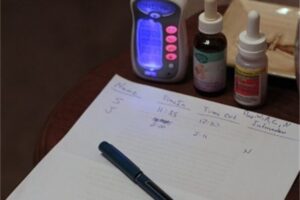
Sleep diary
A sleep diary is an easy way to record sleep-related activities. You can jot down the time you go to bed, wake up, and other important sleep-related behaviors. For example, you can record what time you had caffeine or alcohol. You can also log when you woke up in the middle of the night. Bringing the sleep diary to your appointment can provide your provider with accurate and valuable information.
If you are interested in starting a sleep diary and do not know where to start, click here to obtain a copy.
Actigraphy
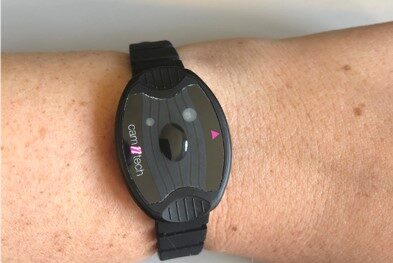
Actigraphy is a method of monitoring rest and activity over an extended period of time. The device resembles a wristwatch and uses an accelerometer to detect motion. Using various algorithms or rules, lack of movement is interpreted as sleep, and motion as wakefulness. Together with a sleep diary, actigraphy can give an accurate assessment of sleep patterns in a person’s natural sleep environment.
Watch Dr. Shadab Rahman discuss how actigraphy can be useful in the evaluation of insomnia.
Dim Light Melatonin Onset (DLMO)
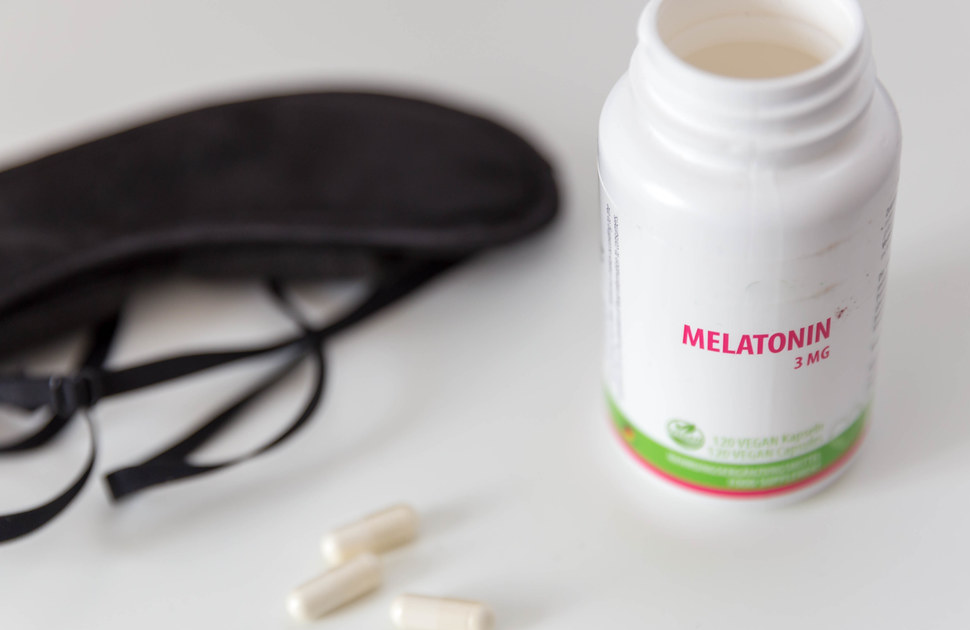
Melatonin is a naturally produced hormone in your body. It is released mostly at night and helps regulate your sleep-wake cycle. The onset of melatonin secretion under dim light conditions (DLMO) has been used to assess your internal 24-hour (circadian) pacemaker. DLMO is used to evaluate problems that are related with the onset and offset of sleep. Studies have shown that pre-treatment measurements of DLMO may improve diagnosis and treatment of circadian sleep disorders. It is common for some circadian sleep disorders to be misdiagnosed as insomnia. In these cases, DLMO is may be beneficial to make the correct diagnosis.
Polysomnography (PSG)
Polysomnography (PSG) is the real-time recording of multiple bodily signals during sleep. A PSG is not used to diagnose insomnia, but it can be used to rule out other sleep disorders. Your brain waves and other body activity are measured.

Do I need a PSG sleep study to be evaluated for insomnia?
It can be inconvenient to participate in an overnight sleep study. Generally, a PSG sleep study is needed only when other sleep disorders like obstructive sleep apnea may be present or if the initial diagnosis is uncertain. Also, if behavioral and pharmacological treatments have failed, or sudden arousals occur with harmful behavior, a PSG sleep study may provide clinicians with more information.
* “Day 57: Sleep Log” by Sean M Freese is licensed with CC BY-SA 2.0. To view a copy of this license, visit https://creativecommons.org/licenses/by-sa/2.0/
† “Motion Watch 8” image provided by Jeanne Duffy, PhD, MBA from the Sleep Division at Brigham and Women’s Hospital
‡ “Open box with Melatonin” by Verch Marco is licensed with CC BY 2.0. To view a copy of this license, visit https://creativecommons.org.licenses/by/2.0/
†† “Polysomnography” this file is licensed under the Creative Commons Attribution-Share Alike 3.0 Unported license.
Getting a Diagnosis
A diagnosis of insomnia requires your active participation with your healthcare provider. Voicing your sleep concerns and behaviors allows your provider to make a more informed clinical decision. Your provider will obtain a relevant sleep, medical, family, substance, and psychiatric history. Your provider may then perform a physical exam and order testing. Afterwards, you may receive a diagnosis of insomnia or another sleep condition. Another possibility is your provider may recommend you to see a sleep specialist.
Dr. Suzanne Bertisch discusses how to get evaluated for insomnia.
Finding a Sleep Specialist Near You
Seeking out treatment for your sleep concerns is a great step toward improving your quality of life. It may even improve your overall mood and productivity levels. When discussing options with your provider, ask if you need a referral to see a sleep specialist or behavioral sleep medicine specialist. Some resources about finding a sleep provider are also included below:
Treatments for Insomnia
Dr. Stephen Amira describes the two different types of treatment strategies for insomnia.
There are two major treatments of insomnia.
The preferred treatment is through adopting behavioral strategies to improve sleep, in particular Cognitive Behavioral Therapy for Insomnia (CBTI). The other strategy is to use medications to improve sleep. You may wonder if you should use behavioral treatments, medications, or both. Here are some things to keep in mind:
- Hypnotics, or sleep-inducing drugs, can be effective in treating insomnia.
- Studies show that CBTI and hypnotics are both initially effective13
- Effects of CBTI are longer lasting. The changes in sleep go beyond the resolution or improvement of sleep.
- Hypnotics act quicker than CBTI. You take the pill, then you go to sleep. However, if you stop taking the medication, its effects can later diminish. If you or someone you know has become dependent on sleeping pills due to the recurrence of insomnia, please visit: https://www.addictioncenter.com/sleeping-pills/ or call (888) 655-1023 for anonymous help.
- Combination therapy of CBTI and hypnotics has not been shown to be better than CBTI alone. Studies also show that hypnotics do not appear to affect the response to CBTI
- Some studies show an increased risk of dementia with long-term use of hypnotics13
Remember that results will vary. Treatment decisions will differ and need to be discussed with your provider.
What about Melatonin?
As mentioned previously, melatonin is a hormone produced in our bodies. It is released by a gland enclosed in the brain known as the pineal gland. An increase in melatonin near bedtime signals to the brain that it is time for sleep. The best use of melatonin supplements is as a sleep aid for circadian rhythm problems rather than insomnia. Moreover, the AASM guidelines recommend against use of melatonin for insomnia.
Despite this fact, many people take melatonin supplements in hopes that it will help them fall asleep. The lack of federal regulation on supplements means that different brands of melatonin can have significantly different amounts of melatonin content14. Before taking melatonin, talk with your provider to see if it is right for you.
Behavioral Treatments
Cognitive Behavioral Therapy for Insomnia (CBTI)
Currently, Cognitive Behavioral Therapy for Insomnia (CBTI) is the recommended first-line treatment for insomnia in adults. The treatment uses one or more behavioral or cognitive strategies along with patient education on sleep. In CBTI, patients are taught to use the following five key strategies: stimulus control, sleep restriction, sleep-interfering arousal/activation, foods and substances, and biological clock considerations.
Dr. Eric Zhou describes the various components of CBTI.
CBTI Strategy | Description |
Stimulus control | Set a regular morning wake time, go to bed only when tired, and get out of bed if unable to fall asleep. The bedroom environment should be made more comfortable for sleep, rather than wakefulness. |
Sleep restriction | Restrict time in bed to only sleeping and limit time awake in bed. After marked improvements in quality of sleep, time in bed is gradually increased by 15-30 minutes increments. This increases sleep time while maintaining decreased time awake in bed. |
Sleep-interfering arousal/activation | Increase relaxation and stress management activities to better cope with sleep-related worries. The transition from “trying to sleep” to “allowing sleep to happen” is a desired outcome. In addition, negative thoughts about the consequences of sleep loss are challenged and reduced. Sleep specialists encourage that the last hour before bedtime to be reserved for unwinding. Keep the bedroom quiet and safe, avoid watching the clock, and limit exercise within four hours before bedtime. |
Foods and substances | Limit alcohol, stimulants like caffeine or nicotine, and food close to bedtime. Alcohol increases wakefulness in the second half of the night, while undigested food can disrupt sleep. Stimulants keep you alert and make it harder for you to fall asleep. |
Biological clock considerations | A sleep specialist may help align your circadian clock to your bedtime and wake time with the use of bright light exposure. This helps you feel sleepy during your bedtime and make it easier to wake during rise time. |
While participating in a complete CBTI program may be most beneficial, shortened programs are now available to patients who can only attend a few sessions. Moreover, there are now abbreviated behavioral treatments for insomnia. These are condensed versions of CBTI that includes fewer sessions over a shorter treatment time course. These shorter programs also focus on changing behaviors and opinions of sleep to improve sleep.
Telemedicine and Digital Treatment Programs
Variations of CBTI, such as its online delivery, have increased its accessibility. According to studies, telemedicine delivery of CBTI remains as effective as in-person CBTI15, 16. There are several digital (computer-delivered) CBTI interventions that are now available.
Insomnia Medications
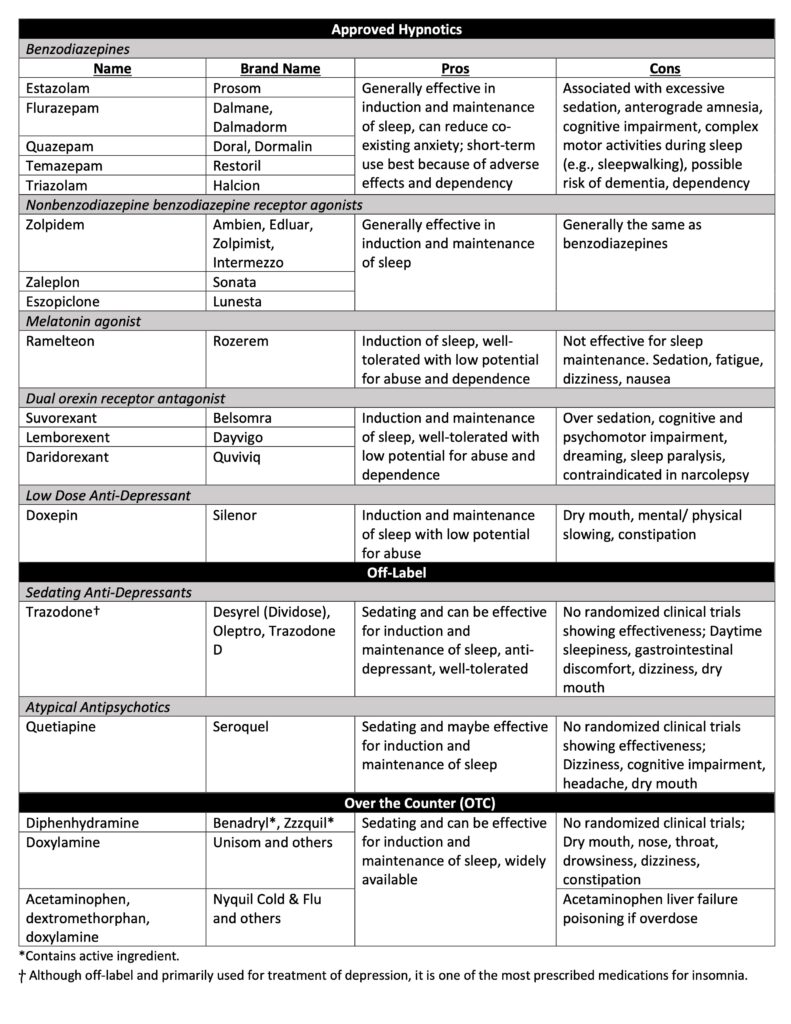
Below is a list of medications that are either approved by the FDA or are commonly used for the treatment of insomnia. Medications are most appropriate for short-term insomnia (i.e., several days or a few weeks) that has been triggered by an emotional or physical event. They should be used under the supervision of a clinician.
Dr. Suzanne Bertisch discusses the most commonly used medications for sleep.
Other Treatments
Progressive Muscle Relaxation (PMR) and general relaxation techniques may promote better sleep and improve stress and body tension. They are not effective for everyone to treat insomnia, but can be tried because of the lack of any side effects.
Meditation and Yoga are activities that may be tried in addition to standard treatment. Remember that not all individuals benefit.
Dr. Sat Bir Khalsa informs us of the potential benefits of yoga on sleep and insomnia.
Impact of Treatment
The Takeaway
Better sleep improves your quality of life, mood, overall health and has positive societal implications.
Perspectives on Treatment
Margaret describes the improvement in her sleep and life after treatment of her insomnia.
Drs. Bertisch and Zhou discuss the effect of insomnia treatment on their patients’ lives.
Taking Action
Congratulations!
You have already taken the first step to address your sleep concerns by going through this module. Here are some things to keep in mind and help answer any lingering questions.
Healthy Sleep Tips
Here are some more simple healthy sleep tips to add to your routine:
- Identify and rid of barriers to restful sleep such as caffeine, long naps, use of electronics at bedtime
- Reduce time in bed awake to increase sleepiness.
- Stick to a sleep schedule, even on the weekends.
- Keep your bedroom for sleeping and intimacy, do not work, watch TV, or eat in bed.
- Do not watch the clock to prevent anxiety or pressure to fall asleep.
- Avoid caffeine and alcohol close to bedtime.
- Avoid smoking, especially in the evening since nicotine often disturbs sleep.
- Avoid greasy or “heavy” foods close to bedtime, but ensure your eating habits are regulated so hunger does not disturb your sleep.
- Limit excessive fluid consumption close to bedtime to limit the need for nighttime bathroom trips.
- Get regular exercise to improve sleep quality and increase sleepiness. It is best if you finish exercising at least two hours before bedtime. A hot shower or bath after exercise may further promote deep sleep.
- Limit noise distractions by sleeping in a well-insulated room or using ear plugs or a white noise source.
- Keep your room dark and cool. Use light-blocking curtains or eye covers, if needed.
- Restrict your time in bed to only the amount of sleep you need to feel refreshed the next day and limit fragmented, shallow sleep. On average, adults require 7.5-8 hours of sleep each night.
- Reserve an hour before bedtime to wind down. Put away electronic devices and engage in relaxing, restful activities like reading or meditation.
- Do not take problems to bed. If you need time to process your thoughts or plan the next day, reserve 15-30 minutes beforehand to make a “worry list” or “To Do list” to address after a restful slumber.
- If you are having difficulty falling asleep, get out of bed. When you try harder to fall asleep, it often makes it more frustrating and difficult to do so. Leave the bedroom, and do something relaxing like reading in dim light. Return to bed only once you feel sleepy and wake up at your usual wake time.
If you would like a print-out copy of these healthy sleep tips, click here. Remember these recommendations are to help promote good sleep. If you have a sleeping disorder like insomnia, then implementing these alone may not treat your condition. If no improvement has been achieved after 2-4 weeks, seek proper treatment. Make sure to discuss your concerns with your provider.
Final Thoughts
Insomnia is not forever. It can be effectively treated. With the proper guidance, mindset, and treatment, you can enjoy better, restful sleep.
References
1. Levenson JC, Kay DB, Buysse DJ. The pathophysiology of insomnia. Chest. 2015; 147 (4): 1179-1192.
2. Van Someren EJW. Brain mechanisms of insomnia: new perspectives on causes and consequences. Physiol Rev. 2021; 101 (3): 995-1046.
3. Spielman AJ. Assessment of Insomnia. Clin Psychol Rev. 1986; 6 (1):11-25.
4. Insomnia, National Heart Lung and Blood Institute, U.S. Department of Health and Human Services.
5. Buysee DJ. Insomnia. JAMA. 2013; 309:706-16.
6. Grandner MA, Williams NJ, Knutson KL, Roberts D, Jean-Louis G. Sleep disparity, race/ethnicity, and socioeconomic position. Sleep Med. 2016;18:7-18. doi: 10.1016/j.sleep.2015.01.020.
7. Lustberg L, Reynolds III CF. Depression and insomnia: questions of cause and effect. Sleep Med Rev. 2000; 4 (3): 253-262.
8. Fortier-Brochu É, et al. Insomnia and daytime cognitive performance: a meta-analysis. Sleep Med Rev. 2012; 16 (1): 83-94.
9. Javaheri S, Redline S. Insomnia and risk of cardiovascular disease. Chest 2017; 152 (2): 435-444.
10.Khosla S, et al. “Consumer sleep technology: an American Academy of Sleep Medicine position statement.” J Clin Sleep Med. 2018; 14(5): 877-880. https://doi.org/10.5664/jcsm.7128.
11. Berryhill S, et al. “Effect of wearables on sleep in healthy individuals: a randomized crossover trial and validation study.” J Clin Sleep Med. 2020; 16(5): 775-783.
12. Collen, JF, York CM. “Wrist Wearables: More Questions than Answers?.” J Clin Sleep Med. 2019; 15(8): 1077-1078.
13. Brasure M, et al. Management of Insomnia Disorder [Internet]. Rockville (MD): Agency for Healthcare Research and Quality (US); 2015 Dec. Report No.: 15(16)-EHC027-EF. PMID: 26844312.
14. Erland, Lauren AE, and Praveen K. Saxena. “Melatonin natural health products and supplements: presence of serotonin and significant variability of melatonin content.” J Clin Sleep Med. 2017; 13 (2): 275-281.
15. Arnedt, J. Todd, et al. “Telemedicine versus face-to-face delivery of cognitive behavioral therapy for insomnia: a randomized controlled noninferiority trial.” Sleep 44.1 (2021): zsaa136.
16. Bertisch, Suzanne. “Cognitive Behavioral Therapy for Insomnia by Telemedicine: Is It as Good as in-Person Treatment?” Harvard Health, 15 June 2021.
17. Baldwin, David S., et al. “Benzodiazepines: risks and benefits. A reconsideration.” J Psychopharmacol. 2013; 27 (11): 967-971.
18. Center for Drug Evaluation and Research. “Boxed Warning for Risk of Serious Injuries Caused by Sleepwalking.” U.S. Food and Drug Administration, FDA.
19. Morin CM, Buysee DJ. Management of Insomnia. N Engl J Med. 2024; 391: 247-258.
20. Morin CM, Benca R. Chronic insomnia. Lancet. 2012; 379(9821):1129-41.
This content was last reviewed on August 6, 2026.
A resource from the Division of Sleep Medicine at Harvard Medical School
About this Site | Site Map | Glossary | Video Index | Technical Help | Feedback | Credits | Disclosures | Disclaimers |Sleep and Health Education Program