Narcolepsy is an important cause of chronic sleepiness, affecting about 1 in 2,000 people. It typically develops during the teen years and lasts for life.
Narcolepsy is a manageable condition, and people with narcolepsy can lead full and rewarding lives.
“Narcolepsy is a neurologic disorder and is one of the most common causes of chronic sleepiness.”
-Dr. Thomas Scammell
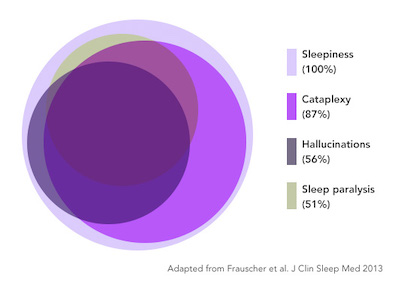
Narcolepsy is a neurological disorder that causes persistent sleepiness and additional symptoms such as brief episodes of muscle weakness known as cataplexy, vivid, dreamlike hallucinations, brief episodes of paralysis when falling asleep or upon awakening (sleep paralysis), and fragmented nighttime sleep. Symptoms typically develop over several months and last a lifetime.
The disorder usually begins between ages 10 and 20, although sometimes it starts as late as age 40 or 50. Narcolepsy affects women and men equally, occurring in about 1 in 2,000 people.
Narcolepsy is a manageable condition, and with an array of treatment strategies, people with narcolepsy can live full and rewarding lives.
For a one-page summary of narcolepsy and its symptoms, causes, and treatments, download What is Narcolepsy?
What is Narcolepsy Information Sheet
Normal sleep patterns are disrupted by narcolepsy
Types of narcolepsy Clinicians now recognize two major types of narcolepsy: narcolepsy with cataplexy (Type 1, muscle weakness triggered by strong emotions) and narcolepsy without cataplexy (Type 2). People who have narcolepsy without cataplexy have sleepiness but no emotionally triggered muscle weakness, and generally have less severe symptoms.
There also exists another, very rare type known as secondary narcolepsy, which occurs with injury to a deep part of the brain called the hypothalamus. In addition to any of the typical narcolepsy symptoms, people with secondary narcolepsy also have severe neurological problems and require large amounts (>10 hours) of sleep.
Sleep basics To understand the symptoms of narcolepsy, it helps to first understand how sleep happens normally. Healthy sleep includes two types of sleep: rapid-eye-movement (REM) sleep and non-REM (NREM) sleep.
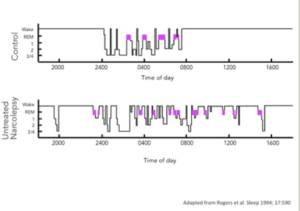
These 24-hour sleep recordings of two individuals—one with a normal sleep pattern (top) and one with untreated narcolepsy—clearly demonstrate the disrupted nature of sleep and wakefulness in narcolepsy.
REM sleep is characterized by dreams, quick eye movements, and paralysis of the limbs and trunk that prevents someone from acting out dreams and getting injured during sleep. In non-REM sleep, dreams are less common and the body is not paralyzed. In individuals without narcolepsy, REM sleep, non-REM sleep, and wakefulness are distinct states that do not mix together.
To learn more about types of sleep and sleep cycles, see Healthy Sleep.
In people with narcolepsy, the regulation of sleep is disrupted: the boundaries between wakefulness and sleep are less distinct, and elements of sleep and wakefulness can mix together.
The sleep patterns of people with narcolepsy differ in several ways from the sleep patterns of people who do not have the disorder:
People with narcolepsy
People without narcolepsy
During the day
Feel drowsy, inattentive, and fall asleep easily
Feel alert, awake, and don’t readily fall asleep
Often enter REM sleep and dream during naps
Generally do not enter REM sleep or dream during naps
Hallucinations on waking common
Hallucinations on waking uncommon
Sleep paralysis common
Sleep paralysis uncommon
May experience cataplexy
Never experience cataplexy
During the night
Spontaneously wake from sleep
Generally sleep well
Can enter REM sleep within 15 minutes
Start out in non-REM sleep and then take 60–90
minutes to enter REM sleep
Symptoms of Narcolepsy
The Takeaway
Persistent daytime sleepiness occurs in all people with narcolepsy.
Narcolepsy can also cause cataplexy, brief episodes of muscle weakness triggered by strong emotions.
In addition, narcolepsy can cause fragmented sleep with vivid dreams, and hallucinations and brief paralysis when dozing off or waking up.
These symptoms typically begin between ages 10 and 20.
Symptoms of narcolepsy differ among individuals. In some, they are mild and may only cause bothersome sleepiness that is relieved by an occasional nap. In others, symptoms can be severe and impact many aspects of life. Symptoms include:
Everyone with narcolepsy has some daytime sleepiness, but the severity of sleepiness varies among individuals. In many, it is so intense that they frequently and unintentionally doze off while sitting in a class, riding in a car, or watching a movie. Many people with narcolepsy report their sleepiness is similar to the feelings that others report after staying awake all night.
This intense and persistent sleepiness often leads to inattention and drowsiness. Sometimes, people with narcolepsy can have “automatic behavior” in which they continue an activity, such as driving or taking notes in class, with little conscious awareness.
In younger children, sleepiness may have a different appearance. The child may be irritable, hyperactive, or have trouble paying attention in school. School-age children may resume napping habits from a younger age, and the naps may be long and unrefreshing.
Many other sleep disorders, such as obstructive sleep apnea, result in both poor quality and insufficient nighttime sleep. As a result, people with apnea often do not feel well rested when they wake, and are sleepy during the day. In contrast, people with narcolepsy usually feel alert upon waking but then feel sleepy throughout much of the day, even though they have had good quality, ample nighttime sleep.
Similarly, most individuals with narcolepsy find that a brief, 15- to 20-minute nap substantially improves their alertness for the next one to two hours. This suggests that the sleepiness of narcolepsy is caused by a problem with the brain circuits that normally promote full alertness, rather than poor quality or insufficient sleep.
Daytime sleepiness occurs in all people with narcolepsy, but the frequency of other symptoms varies among individuals.
Dr. Scammell addresses the myth of “sleep attacks” in narcolepsy.
Cataplexy
About half of all people with narcolepsy have cataplexy: episodes of muscle weakness that are usually triggered by strong emotions. The weakness typically builds up over several seconds and then lasts up to one or two minutes. Some people have only one or two episodes of cataplexy their whole lives; in others, cataplexy can occur up to 20 times each day. Cataplexy usually develops a few months after the onset of sleepiness, though sometimes the first episode of cataplexy will occur many years after sleepiness begins.1
In its severe form, cataplexy can cause weakness of the face, limbs, and trunk, leading an individual to slump to the ground, awake but unable to talk or move for up to one or two minutes. More commonly, the episodes are less severe and may simply cause some slurred speech, and weakness in the face, neck, or arms. These milder episodes are known as partial cataplexy.
In contrast to fainting or falling asleep, consciousness is fully preserved during cataplexy. With longer episodes, which are rare, some people can have dream-like hallucinations.
Quite often, episodes of cataplexy are triggered by positive emotions associated with heartfelt laughter, joking, or getting a sudden surprise such as unexpectedly seeing a friend2. Less commonly, cataplexy can occur with negative emotions such as intense frustration or anger. These triggers vary among people, and individuals with narcolepsy often come to recognize the conditions most likely to bring about their episodes.
In younger children, cataplexy is often triggered by positive emotions, such as feelings of excitement while playing a video game. The characteristics of cataplexy can be different in children. In addition to the transient muscle weakness that can occur, mild weakness can last for hours, with a slack face, half-closed eyes, and a wobbly, unsteady gait3. For unclear reasons, some children may slightly stick out their tongue during an episode.
Dr. Scammell explains how to respond to someone experiencing an episode of cataplexy.
Hallucinations and vivid dreams
Many people with narcolepsy have dream-like hallucinations just as they are falling asleep or waking up. (Hallucinations when falling asleep are known as hypnagogic; when waking up, hypnopompic.) These hallucinations can be quite vivid and may be frightening, such as a sense of a threatening stranger or dangerous animal in the room. Upon waking, it can take a few minutes to shake off the fear and appreciate that it was just a hallucination. Most likely, these hallucinations are rapid-eye-movement (REM) sleep-like dreams occurring when an individual is only half-awake.
Similarly, many people with narcolepsy have very vivid and intense dreams and nightmares while sleeping. In fact, some dreams are so lifelike that it can be hard to tell them from reality. For young children with narcolepsy, differentiating vivid dreams from reality can be especially difficult.
“The Nightmare”, a 1781 painting by Henry Fuseli, depicts sleep paralysis and hallucinations, two symptoms of narcolepsy
Sleep paralysis
Sleep paralysis is an inability to move when on the edge of sleep. It can happen as someone is drifting off to sleep or waking up and usually lasts no more than a minute. When sleep paralysis first occurs, it can be quite frightening, especially as it sometimes includes a sensation of having difficulty breathing. Most likely, this is caused by an intrusion into wakefulness of the normal paralysis that occurs during REM sleep.
Disrupted Nighttime Sleep
People with narcolepsy are very sleepy during the day, yet many have trouble sleeping through the night. They may experience fragmented sleep—waking up several times each night for 10–20 minutes—that can worsen daytime sleepiness.
The Science of Narcolepsy
The Takeaway
Research has revealed that narcolepsy with cataplexy is caused by a lack of orexins (hypocretins), brain chemicals that help sustain alertness and prevent REM sleep from occurring at the wrong times.
Genetics, age, and triggering infections or inflammation play important roles in the development of narcolepsy.
Ongoing research is shedding light on many aspects of the disorder; as more is learned about the biology of narcolepsy, the door widens for more effective treatments.
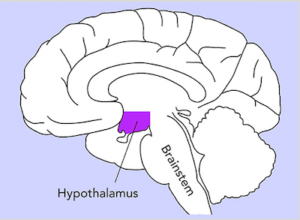
The hypothalamus is a deep brain region just in front of the brainstem. It regulates arousal, sleep, hunger, body temperature, and other fundamental behaviors.
Recent research has revealed that narcolepsy with cataplexy is caused by a lack of orexins, also known as hypocretins, key brain chemicals that help sustain alertness and prevent REM sleep from occurring at the wrong times.
Orexins are neurotransmitters, chemicals that transmit signals from a neuron to a target neuron. Orexins are only produced by a small cluster of neurons in the hypothalamus, a brain region located roughly behind the eyes and between the ears. Of the billions of neurons in the brain, only about 100,000–200,000 produce orexins. Orexins are released from these neurons during wakefulness and bind to specific orexin receptors on target neurons, which increases the activity of these neurons.
Orexins were first discovered in 1998 when two research groups independently identified them in the brain. 1,2 One group named them hypocretin-1 and -2, and the other group named them orexin-A and -B. (This website uses the term “orexins,” as this name is preferred by clinicians.)
Orexins and brain function
In individuals without narcolepsy and whose sleep is well regulated, orexins are released during wakefulness and increase activity in target neurons that promote wakefulness and suppress rapid-eye-movement (REM) sleep. In people who have narcolepsy with cataplexy, most of the orexin-producing neurons die off. The consequent lack of orexins results in lasting sleepiness and poor control of REM sleep. In fact, REM sleep can become so poorly regulated that the paralysis or dreaming that normally occurs only in REM sleep can mix into wakefulness, causing cataplexy and dreamlike hallucinations.
Though much has been learned about narcolepsy with cataplexy, considerably less is known about the cause of narcolepsy without cataplexy. Most likely, it is caused by less severe injury to the orexin neurons, resulting in fewer and less severe symptoms. (See Key discoveries below for more on some of the studies that have shed light on the role of orexins in narcolepsy.)
Dr. Thomas Scammell discusses the role of a gene that appears to be important in the development of narcolepsy with cataplexy.
How orexin loss affects the brain
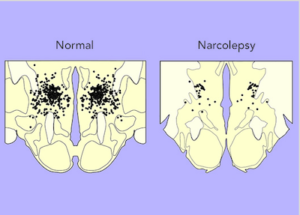
The number of hypocretin (orexin)-producing neurons in the brain is markedly reduced in the brains of people with narcolepsy.
In addition to revealing the normal role of orexin neurons in the brain, research has provided many insights into how a loss of orexin signaling causes sleepiness and cataplexy.
Many researchers theorize that the sleepiness of narcolepsy is a consequence of “sleep state instability,” a condition in which the thresholds between wake and sleep are easily crossed, resulting in both fragmented wakefulness during the daytime and fragmented sleep at night.
During normal wakefulness, orexin neurons send signals that produce long-lasting increases in the activity of many other neurons essential for sustaining alertness and wakefulness. These neurons include those that produce key neurotransmitters such as norepinephrine, serotonin, and dopamine. In narcolepsy, the loss of orexins may result in reduced or inconsistent activity in these target neurons. As a consequence, people with narcolepsy can be fully alert at times, but have great difficulty sustaining this alertness for long periods of time.
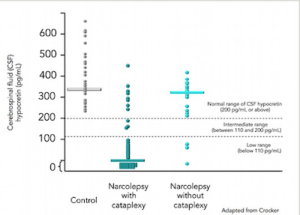
Several research studies have revealed very low levels of orexin in about 90% of patients with narcolepsy with cataplexy.
Cataplexy and sleep paralysis are unusual states in which the brain circuits that produce paralysis during REM sleep become active during wakefulness. During REM sleep, most muscles are paralyzed by circuits in the lower brainstem and spinal cord. These paralysis circuits are normally blocked by norepinephrine and serotonin during wakefulness. With loss of orexins, levels of these two neurotransmitters may be lower, permitting paralysis to occur even during wakefulness. This observation provides the main rationale for treating cataplexy with antidepressants that increase brain levels of norepinephrine and serotonin.
Ongoing research is also beginning to reveal how cataplexy may be triggered by positive emotions. The amygdala and prefrontal cortex are brain regions that regulate emotional responses and connect with the paralysis pathways in the brainstem. Neurons in the amygdala and prefrontal cortex are active during cataplexy, and inactivating either of these regions markedly reduces cataplexy in mice with narcolepsy. As these triggering pathways become better understood, it may be possible to target them with new medications.
Understanding how narcolepsy develops
Over the past several years, researchers have made good progress in understanding the process that kills the orexin neurons.
Genetic factors clearly play a role. Most people with narcolepsy have inherited a gene that codes for the human leukocyte antigen (HLA) DQB1*06:02, which is important for immune function. This gene is found in 12–25% of the general population, and it increases the risk of developing narcolepsy 7- to 25-fold.3 Additional genes can increase or decrease the risk of developing narcolepsy, and, like HLA-DQB1*06:02, most of these affect the functions of the immune system. Normally, the immune system kills off bacteria and viruses. These discoveries suggest that narcolepsy is an autoimmune disease in which the immune system accidentally kills off the orexin-producing neurons.
Researchers are now beginning to identify some of the triggers for this autoimmune attack on the orexin neurons. Just after the onset of narcolepsy, people tend to have increased levels of antibodies against streptococcus, the bacteria that causes strep throat and other infections.4 In addition, narcolepsy most commonly begins in the late spring and early summer, suggesting that an autoimmune attack on the orexin neurons may be triggered by strep or another winter infection.5
The most compelling evidence that an immune process can kill the orexin neurons comes from an event that triggered an increase in narcolepsy in Scandinavia and some other parts of Northern Europe. In the winter of 2010–2011, governments and the general public were very concerned about a severe form of influenza, known as H1N1, spreading around the globe. In many countries, most of the population received vaccination against this flu, and Finland and some other northern European countries chose to use a very potent brand of H1N1 vaccine known as Pandemrix. One to two months after receiving this brand of vaccine, dozens of children developed narcolepsy, and overall, the rate of new cases of narcolepsy in children increased 8- to 12-fold.6,7 Importantly, all of these children who developed narcolepsy carried the gene HLA-DQB1*06:02. Only a few adults appeared to develop narcolepsy in connection with this vaccine.8 (Pandemrix, which is no longer in use anywhere, was never licensed for use in the United States.)
Dr. Thomas Scammell discusses the role of a gene that appears to be important in the development of narcolepsy with cataplexy.
In the last few years, several research labs have found that adults and children with narcolepsy may have T cells, a type of immune system cell, that selectively target the orexin peptides.21–24 These T cells may directly kill the orexin neurons, or more likely, they trigger other immune cells to damage and kill the orexin neurons.
Thus, it appears that three factors are important for the development of narcolepsy:
Genes that influence the immune system, such as HLA-DQB1*06:02
A triggering factor that activates the immune system, such as infection with strep
A vulnerable age during which the immune response or some characteristics of the brain make an autoimmune attack on the orexin neurons more likely
By gaining a better understanding of this process, researchers hope to develop medications that can stop narcolepsy just as it begins and prevent further injury to the orexin neurons.
Practical implications
What are the practical implications of these discoveries? First, it is important to recognize that the hereditary aspects of narcolepsy are a relatively small concern. If a parent has narcolepsy, there is only about a 1% chance that her or his child will have the disorder. Up to 25% of the population carries the gene HLA-DQB1*06:02, but less than 1% of them will develop narcolepsy as additional factors are needed to trigger an attack on the orexin neurons. Secondly, though it seems very likely that Pandemrix triggered narcolepsy in certain children, this vaccine was unusually potent, and future vaccines most likely will be designed differently now that this risk is known. There is no compelling evidence that other vaccines cause or worsen narcolepsy, so it is fine for people with narcolepsy and their families to receive all routine vaccinations.
Key discoveries
Narcolepsy was first described by doctors in the 1870s, but only in the past 15 years has the underlying cause become clear. Some of the greatest insights about narcolepsy have come from the laboratories of Dr. Emmanuel Mignot of Stanford University and Dr. Jerome Siegel of the University of California, Los Angeles. In 2000, each group independently discovered that narcolepsy with cataplexy is caused by a loss of orexins in the brain. These and other valuable insights have revealed much about how the brain normally functions, as well as what goes wrong in narcolepsy.
Current theories about the role of orexins in narcolepsy are based on research findings that include the following:
Groundbreaking discoveries from Dr. Emmanuel Mignot of Stanford University (Left) and Dr. Jerome Siegel of the University of California, Los Angeles, have led to many new perspectives on the nature of narcolepsy.
Research in animals was the first to shed light on the connection between narcolepsy and loss of orexins. Just like people with narcolepsy, dogs, rats, and mice with disrupted orexin signaling fall asleep frequently and often have episodes of cataplexy.9,10,11,12 In addition, tasty food can trigger cataplexy in dogs and mice with narcolepsy, suggesting that their cataplexy is triggered by positive emotions.13,14
Researchers then examined the brains of people with narcolepsy with cataplexy and consistently found a 90–95% decrease in the number of orexin-producing neurons.15, 16, 17 orexin-1 can also be measured in cerebrospinal fluid, the liquid that surrounds the brain, and about 90% of people with narcolepsy with cataplexy have very low or undetectable levels of orexin-1.18 Thus, it seems likely that some process kills the orexin neurons, resulting in narcolepsy with cataplexy.
Thus far, the cause of narcolepsy without cataplexy is less clear. Researchers have examined the brains of only a few people with this type of narcolepsy, and these seem to have only a moderate loss of the orexin neurons.19 orexin-1 levels in spinal fluid are usually normal, although about 30% of these individuals have low or undetectable levels.18,20 Among these people with low orexin, about one-third may develop cataplexy years later,20 suggesting that there may be some ongoing injury to the orexin neurons. Thus, narcolepsy without cataplexy may be caused by a less severe injury to the orexin neurons, but because so little is known about this form of narcolepsy, it remains possible that it has an entirely different cause.
Narcolepsy can present challenges to daily living: in addition to sleepiness, people with narcolepsy may experience mental fogginess, poor memory, and hallucinations.
Social life can be impacted when sleepiness and other symptoms disrupt conversations, social events, and plans for activities.
These challenges can be managed by educating friends and family, communicating with others, maintaining social flexibility, and getting involved with narcolepsy support networks.
I think narcolepsy has been one of the things that has motivated me even more to succeed. I’ve got to utilize every single moment that I have awake!
-Liza.
Narcolepsy presents unique challenges that can affect many aspects of daily life. Even when medications are optimized, sleepiness, difficulties with attention, and cataplexy can affect the quality of interpersonal relationships and impact performance at school or work. In addition, full support from friends and family can be lacking, as many people do not understand narcolepsy or may have misconceptions about it.
The good news is that narcolepsy is a manageable condition, and nearly everyone with narcolepsy can lead a fulfilling life.
Personal and social impacts
Narcolepsy can affect many aspects of life, including an individual’s self-esteem, social relations, and quality of life.
People with narcolepsy may struggle with:
Mental fogginess that makes it hard to concentrate
Memory issues and automatic behavior that can lead to feelings of uncertainty about daily events and self-doubt
Sleepiness that causes unintentional napping at school or work, which can be embarrassing and problematic
Hallucinations around sleep, sleep paralysis, and cataplexy, all of which can be frightening and misunderstood
Narcolepsy can also impact social interactions. People living with narcolepsy may:
Strain to stay awake during social activities such as watching a movie with friends
Be confused or grumpy upon waking
Need to take naps at inconvenient times
Have hallucinations during conversations
Experience cataplexy at awkward times, such as when laughing with friends at a party
Julie Flygare is a writer, runner, and patient advocate living with narcolepsy. “Making adjustments for narcolepsy doesn’t mean you are disabled or a failure,” she says. “It means you are being smart and strategic, working with your narcolepsy to live your most successful life.” Visit Julie’s site at https://project-sleep.com/ for more information.
Narcolepsy educator Lisa Rezza talks about the importance of advocacy.
Managing impacts
People with narcolepsy and their friends and family can work together to help manage the impacts of narcolepsy on day-to-day living. (See At School and At Work to learn more about managing narcolepsy in those environments.) For someone with narcolepsy, it may help to:
Develop self-awareness. Over time, most people with narcolepsy learn what aggravates their symptoms. This knowledge can help people manage their symptoms effectively. (For example, one might take a wake-promoting medication before commuting home, use a cataplexy-suppressing medication before a party, or schedule regular naps at times of day when sleepiness is most troublesome.)
Educate friends and family. Friends, family, and others who are educated about narcolepsy and how it affects the person they know can react calmly and provide physical and emotional support when, for example, the need for an unplanned nap arises or an episode of cataplexy occurs. You can use a copy of What Is Narcolepsy? (PDF), and information on this website, to help educate family and friends.
Communicate with others. It is especially important for people with narcolepsy to be able to communicate with others and ask for support, so that when symptoms do arise, friends and family can respond with compassion and care. Talking openly about sleepiness and cataplexy can help clear up misunderstandings before they occur. If a friend or family member has trouble understanding narcolepsy, inviting them to a doctor’s appointment, support group, or conference focused on narcolepsy can be extremely beneficial.
Maintain social flexibility. For people with narcolepsy, it is essential that those with whom they interact are supportive and flexible with plans.
Follow medication regimens. If a person with narcolepsy has been prescribed medications to help manage his or her condition, it is important that regimens be followed closely to ensure the most success in reducing symptoms throughout the day. See Medications for Narcolepsy (PDF) for a summary of medications used to treat narcolepsy.
Finding support
Many people with narcolepsy find it invaluable to educate themselves about the disorder as well as learn from others and share experiences. Websites, online forums, local support groups, and conferences are great places for people with narcolepsy, their partners, family, and friends to improve their understanding of narcolepsy, share tips, and find support. See Resources for a list of websites and organizations that provide more information about narcolepsy.
At School
The Takeaway
Students with narcolepsy can perform well in school. Teachers and school staff can help parents identify signs of narcolepsy in a child, and, if the child is diagnosed, help work out a plan to provide academic support.
Students can improve alertness by scheduling naps, keeping a regular sleep schedule, and working with their doctor to optimize medications.
Narcolepsy often begins just before or during teen years, and understanding its impact at school can improve academic and social outcomes.
Teens with narcolepsy often have to work hard to establish and maintain a schedule that works well for them during their high school years. Such planning requires self-discipline. It also requires understanding from those in his or her life.
Despite the challenges, academic success—as well as good social and emotional development in school—is achievable once appropriate strategies are identified and implemented. In fact, students with narcolepsy obtain college degrees just as often as the general population.1
Identifying issues
As narcolepsy typically develops during the teen years, it often impacts school and after-school activities. Some sleepiness is common in teens, so it is important to be on the lookout for additional clues that might suggest narcolepsy.
The first indicators of trouble related to narcolepsy can be difficulty completing homework or even falling grades. These may show that a student is experiencing excessive daytime sleepiness that makes it difficult to sustain attention for long periods.
Teachers often are in the best position to rate a child’s alertness and can help parents get a better understanding of their child’s school experience. However, teachers may notice a child dozing off but assume the child is uninterested or simply needs more sleep. Likewise, many children may not fully appreciate how their sleepiness affects their school performance. Therefore, it is important for parents to maintain an active dialogue with their child and their child’s teachers, school nurses, and others to assess the extent of daytime sleepiness. This dialogue should continue both before and after diagnosis.
Working with schools
Once narcolepsy has been medically diagnosed, close communication between parents, teachers, school administrators, and others at the school is key to helping a child with narcolepsy succeed. Narcolepsy symptoms and their severity differ among individuals, so any special plans must be tailored to each child’s specific needs.
As most people are unfamiliar with or have misconceptions about narcolepsy, teachers and others may benefit from learning more about the disorder. This is especially important if symptoms are still problematic even after medications are optimized and the child is getting enough sleep. Download Understanding Narcolepsy in School Settings (PDF) for more information on narcolepsy and how it may impact academic success, and share it, and this website, with school staff.
Narcolepsy educator Lisa Rezza describes school support resources available to students and their families.
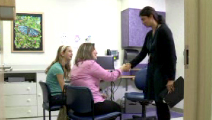
A note from a child’s doctor describing how narcolepsy affects the child’s academic performance is often helpful. In addition, the doctor can specify how medications should be taken during school, and, if needed, may recommend that a student be permitted to nap during school in the nurse’s office or elsewhere.
Check in periodically with the school nurse to ensure that his or her office has the most up-to-date list of any medications that should be taken during school hours.
Ask the school nurse and others in contact with the child if they can provide updates when they notice changes in the child’s behavior. Passing this information along to the child’s doctor can help the provider refine treatment plans.
Special education plans
In general, narcolepsy does not limit a student’s ability to participate in sports or other extracurricular activities. Speak with your medical provider about specific activities.
Sometimes it is helpful to develop a special education plan to meet the needs of a student with narcolepsy.
For more information on these two types of plans, see the National Center for Learning Disabilities “Section 504 and IEP Comparison Chart web page.
Types of plans. There are two main types of special education plans: Section 504 plans and Individualized Education Program plans.
Section 504 plans are designed to protect the rights of individuals with disabilities in programs such as public schools that receive federal funding from the US Department of Education. These plans are managed under a school’s general education program.
In contrast, Individualized Education Program (IEP) plans are generally geared toward specialized education programs and placements outside of the regular classroom for students who are eligible under the Individuals with Disabilities Education Act.
Evaluation. Each elementary and secondary school student with narcolepsy must be individually evaluated because simply having narcolepsy or another disorder does not automatically qualify a student for accommodations. Specialized evaluations, known as psycho-educational and neuropsychological evaluations, are often useful in identifying cognitive strengths and weaknesses in children with narcolepsy.
Accommodations. If a student is identified as being eligible for aids or services, the next step is to determine which services will be most appropriate. Accommodations should be tailored to each student’s needs. Examples of helpful accommodations include extra time or a short break during tests, help with taking notes, designated nap space, and recording devices such as smart pens that synchronize spoken words with notes. Having teachers share class notes or slides, or having audio versions of textbooks available to provide additional support while reading, can also be helpful.
Improving alertness
The sleepiness brought on by narcolepsy can be debilitating and overwhelming. However, many children have learned to work with their narcolepsy and have found simple things they can do to improve alertness at school.
Here are some strategies:
Brief naps during the school day or before after-school activities may help students manage the daytime sleepiness associated with narcolepsy.Work with a doctor to optimize the timing and doses of medications. This can help improve alertness across the school day and while studying later. Talk with your doctor regularly about how medications are working.
Stay active during classes. Some teens find it useful to sit in the back of the class so they can stand up and walk around or get a drink. Others may find that being in the front of the room works best. Staying engaged in the material and asking questions can also help sustain alertness, as can doing something as simple as chewing sugar-free gum.
Consider limits on after-school activities. Evaluate after-school activities to determine if they are preventing you from getting enough sleep. Prioritize the ones you are most passionate about.
Remain active while studying. Read while standing at a countertop, study in a cool room, or take a break and walk around every 20 minutes. Studying and discussing homework with fellow classmates can also help keep you alert.
Take an exercise break. Exercise can improve alertness for 15–30 minutes afterwards.
Keep a regular sleep schedule. Going to bed and waking at the same time each day, including weekends, can help you fall asleep and awaken more easily. Although challenging, this self-discipline is especially important in the often busy and sometimes chaotic years of high school and college.
Get enough sleep at night. On average, children ages 5–12 need 10–11 hours of sleep, and teens ages 13–18 need 8.5–9.5 hours of sleep. Everyone feels sleepy if they don’t get enough sleep, but this can hit teens with narcolepsy especially hard.
Patient Audrey Cross comments about the benefits of taking a nap at school
Download a printable version of Tips for Teens with Narcolepsy: Improving Alertness (PDF) to hand out to teachers, nurses, and school administrators to help them better understand what can be done to increase your alertness.
Tips for Teens with Narcolepsy
At Work
The Takeaway
Though not everyone decides to disclose their narcolepsy to their employer, those who do find it’s best to discuss narcolepsy with their supervisor before any problems arise.
Alertness at work is often improved by thoughtful timing of medications, getting enough sleep at night, and fitting in a brief nap during the workday.
Under the Americans with Disabilities Act, many employers are required to provide reasonable accommodations to help employees fulfill their work obligations.
Determining whether and when to disclose narcolepsy to people at work is a personal and sometimes difficult decision.
Managing narcolepsy in the workplace begins with the individual understanding his or her symptoms and perhaps talking with supervisors and co-workers about their symptoms. There is no “one size fits all” approach. In general, however, it’s often best to discuss narcolepsy at work before problems arise. For example, employers may be accommodating after learning that an afternoon nap improves the employee’s productivity and that he or she is willing to stay late to make up the time spent napping. Without disclosure and some understanding of narcolepsy, employers may misinterpret sleepiness as disinterest or poor motivation.
Informing employers
Determining whether and when to disclose narcolepsy to people at work is a personal and sometimes difficult decision.
People often feel anxious about discussing their narcolepsy with an employer, yet in some work environments, informal disclosure is the right option. After establishing a good rapport, an honest discussion with others about your narcolepsy can be very helpful. As most employers will be unfamiliar with narcolepsy, be prepared to give a brief explanation of the disorder and any symptoms that may arise at work. Provide them with a copy of What Is Narcolepsy? (PDF), and let them know about this website, directing them to specific content that relates to your situation. A letter from your sleep specialist can be helpful to document your diagnosis and further explain your symptoms.
In advance, think about accommodations that will help you do your job better—such as scheduled nap times during work hours or flexible start and end times for the workday—and consider discussing them with your employer.
In other settings, formal disclosure to your supervisor or human resources department may be appropriate to acquire reasonable accommodations. Many employers are obligated to make reasonable accommodations under the Americans with Disabilities Act to help employees meet their essential job duties.
Telling co-workers
Deciding to tell your co-workers about your narcolepsy can also be a difficult decision. Some peers may not know much about narcolepsy or may have misconceptions about the condition. If you can help educate them about what narcolepsy is and how it affects you, they may be less likely to form their own conclusions about sleepiness, cataplexy, and other symptoms of narcolepsy. Establishing trust, respect, and a good rapport with co-workers first may help them respond appropriately and supportively.
Narcolepsy educator Lisa Rezza describes workplace accommodations that may be available
Improving alertness
Here are some simple things you can do to improve alertness at work:
Work with your doctor to optimize the timing and doses of medications.
Get enough sleep at night. Know how a late night affects you and how best to recover.
Talk with your employer about fitting in a 15- to 20-minute nap during work.
Focus on your less exciting tasks at times when you are most alert.
Stay active at work by reading while standing up, keeping your office cool, and taking a break every 20 minutes to walk around.
Safety
The Takeaway
Sleepiness can impair driving in many people with narcolepsy.
People with narcolepsy must determine when they are safe to drive or whether to drive at all.
People with narcolepsy need to consider how they will manage day-to-day activities that are potentially hazardous, such as driving, operating heavy machinery, or even cooking.
Driving
Staying alert while driving can be a challenge for people with narcolepsy: they can doze off at a stoplight, while stuck in traffic, or when driving on the highway. Nodding off, even for a moment, is dangerous, as it takes only a few seconds for a car to drift off the road or hit an obstacle. Though uncommon, cataplexy while driving can cause a person to lose control of the automobile. Therefore, individuals with narcolepsy must determine when it is safe to drive, if at all.
Research on driving with narcolepsy is limited, but what is known highlights the problem. Several studies of people with narcolepsy have found that more than half have fallen asleep while driving, and over one-third have had an accident due to sleepiness.1,2,3 Highway driving can be especially difficult, as many people with narcolepsy find it difficult to sustain vigilance on long drives.4Overall, it appears that people with narcolepsy have a roughly three- to four-fold increased risk of having a car accident.1,3
Determining whether to drive
Many people with narcolepsy find it difficult to sustain vigilance on long drives.
Deciding whether to drive, and what precautions to take if you do drive, is particularly important. Before deciding to drive:
Do a self-assessment. Ask yourself whether you can maintain the alertness needed to drive safely. If so, for how long can alertness be maintained?
Consult with family and friends. Ask family and friends for honest feedback. They may recognize signs of sleepiness that you are not fully aware of.
Discuss driving with your doctor. Your doctor needs to consider your safety, the safety of your passengers, and the welfare of others on the road. Getting a driver’s license may require a letter or form from a doctor stating that the individual’s narcolepsy is well controlled and that they are unlikely to doze off when driving. In some cases, the doctor may choose to do a Maintenance of Wakefulness Test (MWT) to determine whether an individual can stay awake even under boring circumstances.5 This test cannot guarantee that an individual will remain alert when driving, but the results can still be helpful for optimizing medications. This test is especially important if a person with narcolepsy has previously fallen asleep while driving.
When sleepiness is under good control, many people with narcolepsy are safe to drive. However, they must know their limits. Some individuals may be safe driving around town for 30 minutes but not on a four-hour, boring highway drive. Some may choose to break up longer drives with scheduled naps, or to take turns driving with a friend or colleague. Others may choose not to drive after a meal or after 7 p.m. Making these adjustments is a smart and strategic way to work with your narcolepsy.
Dr. Kirsch discusses whether cataplexy is a safety risk
Research suggests that people with narcolepsy have an increased risk of having a car accident.
The issues around driving and narcolepsy are similar to those around driving and epilepsy. More information on driving laws in specific states can be found at the Epilepsy Foundation’s “Driving Laws by State” web page.
Occupational and household hazards
Self-awareness about sleepiness patterns and cataplexy triggers can help you reduce the risk of accidents at home or work.
Sleepiness and cataplexy can lead to accidents at home or at work. About 30–50% of people with narcolepsy have had accidents or near accidents that involved falling asleep while cooking, smoking, running dangerous machinery, or crossing the street.2, 3, 6 The best insurance against having an accident is to understand the conditions under which you are likely to become inattentive or fall asleep. Along these lines, it may be wise to avoid jobs that require sustained vigilance under boring conditions.
Self-awareness is key. For example, the more aware you are of what triggers your cataplexy, the better able you will be to anticipate and manage it. Cataplexy seldom occurs at critical times, when it would be truly dangerous. Rarely, however, cataplexy is both frequent and severe, with incapacitating paralysis. Such an episode while, say, driving, holding a baby, or swimming could have serious consequences. During such activities, avoid anything that might trigger an episode, and take precautions if weakness begins. Self-awareness enables you to work with your narcolepsy, set priorities, and make adjustments to live successfully with your disorder.
Self Evaluation
The Takeway
Sleepiness can occur for a variety of reasons, but persistent sleepiness that occurs even after a good night’s sleep is usually the first clue that someone may have narcolepsy.
Self-assessment tools on this website can help identify problematic sleepiness and symptoms of narcolepsy.
“Most strikingly, it wasn’t just sleepiness in boring classes or in car rides—relatively mundane things. She was actually falling asleep during her fun activities.”
-Dr. Kiran Maski on diagnosing Liza
While sleepiness can occur for a variety of reasons, persistent sleepiness is usually the first clue that someone may have narcolepsy. To help identify problematic sleepiness, ask yourself these questions:
“Once you have caught up on your sleep during weekends or vacation, are you still likely to fall asleep when inactive?”
“Do you feel rested in the morning but then tired throughout much of the day?”
“Do you doze off at inappropriate times?”
If you answered “yes” to any of these questions, you should discuss your sleepiness with your primary care physician or sleep specialist.
Dream-like hallucinations just prior to sleep, and sleep paralysis at times when you are awake, are suggestive of narcolepsy. However, these symptoms are not considered very specific for the disorder, as they can occur in people who simply need more sleep. In contrast, true cataplexy is very distinct and occurs almost exclusively in narcolepsy.
Helpful tools
Many things can cause daytime sleepiness, but persistent sleepiness, even after a good night’s sleep, may be a sign of narcolepsy.
About 1 in 2,000 people have narcolepsy, but it may go unrecognized for years by individuals and their doctors. Sleepiness is often overlooked or just brushed off as a part of life. In addition, most primary care physicians and pediatricians are unfamiliar with how to recognize and treat narcolepsy. One helpful self-assessment tool for recognizing sleepiness is theEpworth Sleepiness Scale(ESS).1You can measure your daytime sleepiness using a printed version of the ESS (PDF) or the online version of this screening tool. An ESS score higher than 10 indicates troublesome sleepiness, and many people with narcolepsy have scores higher than 15.1
The Ullanlinna Narcolepsy Scale (named after the clinic in Finland where it was developed) is also a well-validated questionnaire for diagnosing narcolepsy with cataplexy. Print out the Ullanlinna Narcolepsy Scale (PDF) to assess your symptoms.
If you suspect you have narcolepsy, discuss your concerns with a medical professional familiar with narcolepsy and other sleep disorders.
See the Finding a Doctor section of this website for more information on finding a sleep specialist.
Dr. Kirsch notes some reasons why narcolepsy may go undetected in teenagers.
Ullanlinna Narcolepsy Scale
Epworth Sleepiness Scale
The Takeaway
The Epworth Sleepiness Scale can be used to assess daytime sleepiness. For other ways to identify problematic sleepiness, see Self–Evaluation.
Daytime sleepiness can have many causes, including narcolepsy, which affects up to 1 in 2,000 people.
Dr. Scammell explains the Epworth Sleepiness Scale.
Download the Epworth Sleepiness Scale.
Finding a Doctor
The Takeaway
If you suspect you have narcolepsy, it’s often best to consult with a sleep medicine specialist, as many primary care doctors don’t have a thorough understanding of this disorder.
Your primary care physician may know of good sleep medicine specialists near you. In addition, some online directories offer recommendations, though these resources may not include all the available specialists in your region.
Liza was referred to Dr. Maski, a sleep specialist, by her primary care physician. Clinical care by a sleep specialist is generally recommended for diagnosing and treating narcolepsy.
The general public and most doctors have a limited understanding of narcolepsy, so it can be difficult to get a prompt diagnosis and appropriate treatment. Many people with narcolepsy struggle with their symptoms for years before being diagnosed, and even then, it can be a challenge to find the best medications and treatment strategies. Persistence is key.
Ask your primary care doctor for the names of qualified sleep medicine specialists near you. Though the following directories are incomplete, you can also search for a sleep professional or clinic at SleepEducation.com’s “Find a Sleep Center Near You” web page, a resource from the American Academy of Sleep Medicine.
Getting a Diagnosis of Narcolepsy
The Takeaway
A sleep specialist will ask about symptoms of narcolepsy and other causes of sleepiness and perform a physical exam. If narcolepsy is suspected, the doctor will order sleep studies to help confirm the diagnosis.
Sometimes people with narcolepsy have additional sleep disorders (such as sleep apnea) that should be treated, as they can worsen sleepiness.
Obesity and depression are common among people with narcolepsy and may also require treatment.
The first step in getting treated for narcolepsy is getting diagnosed. With proper diagnosis and treatment, the symptoms of narcolepsy usually improve substantially; left untreated, narcolepsy can seriously disrupt day-to-day life, resulting in challenges at school and work, impaired social life, and unsafe driving.
A doctor familiar with narcolepsy will start out by asking about sleepiness, cataplexy, and other symptoms. The doctor will rule out obvious causes of sleepiness: insufficient sleep, sedating medications, or problems with the timing of sleep, such as staying up too late.
The doctor will then do a physical and a neurological examination to look for signs of other disorders that can cause sleepiness or muscle weakness. The majority of people with narcolepsy will have normal exams.
If a doctor suspects narcolepsy, the next step will be to confirm the diagnosis with sleep studies.
Patient Audrey Cross talks about what a diagnosis of narcolepsy meant to her.
Additional sleep disorders
People with narcolepsy may have additional sleep disorders that can worsen sleepiness and other symptoms, including sleep apnea, sleepwalking, and REM sleep behavior disorder.1 Recognition of these additional problems is important because treating them can improve sleep quality and produce better daytime alertness. For example, if a patient with narcolepsy also has some sleep apnea, it is often helpful to treat the sleep apnea first, as this should produce some improvement in daytime sleepiness. If troublesome sleepiness persists, the doctor may recommend medications for the residual sleepiness caused by the narcolepsy.
Obesity
Many people with narcolepsy have a tendency toward being overweight. Adults with narcolepsy weigh about 15–20% more than would be expected on average in the general population.2, 3 In the months after narcolepsy begins, sudden weight gain can be dramatic, with some children gaining 10–40 pounds over several months.4 The cause of this obesity remains unknown; in general, people with narcolepsy do not eat more than average, but they may burn fewer calories each day, perhaps due to lower metabolism.
Depression
Depression is more common in people with narcolepsy than in the general population.5,6,7 This could be due to a natural reaction to having a disorder that impacts many aspects of life, but it is also possible that the depression is a direct consequence of the loss of the hypocretin-producing neurons. Animal research suggests that the hypocretin neurons amplify brain signals related to rewards and positive emotions, and some researchers hypothesize that those positive signals are reduced with loss of the hypocretin neurons. If someone with narcolepsy has persistent feelings of sadness or loss of interest in activities, speaking with a doctor or counselor could be helpful.
Testing for Narcolepsy
The Takeaway
Sleep studies can provide information about how you sleep. These studies usually include an overnight stay followed the next day by a series of five daytime naps in a sleep laboratory.
Before the tests, it is important to get sufficient sleep on a regular schedule and to discontinue any medications that can affect sleep.
In people with narcolepsy, the sleep studies usually provide clear evidence of sleepiness and abnormal patterns of REM sleep.
If a doctor suspects narcolepsy, he or she will likely recommend sleep studies. These tests are essential to provide clear evidence of sleepiness, to examine the pattern of rapid-eye-movement (REM) sleep, and to determine whether other disorders might be contributing to a patient’s symptoms.
Types of Sleep Tests
The diagnosis of narcolepsy is usually supported by test results from a polysomnogram and the Multiple Sleep Latency Test (MSLT).
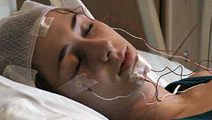
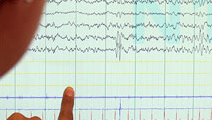
A polysomnogram is a recording of brain waves, eye movements, muscle tone, and breathing across a night of sleep. In people with narcolepsy, the polysomnogram is done to evaluate the amount and quality of nighttime sleep and to look for any evidence of an additional sleep disorder (for example, sleep apnea or periodic limb movements in sleep).
The Multiple Sleep Latency Test is often the most important test for diagnosing narcolepsy. It is a series of five scheduled naps spread across the day. Every two hours, the patient is given an opportunity to sleep for 20 minutes or more. The MSLT is done the day after the polysomnogram so a doctor can determine whether the prior night’s sleep could be affecting the daytime naps.
Dr. Scammell describes how a polysomnogram and a multiple sleep latency test (MSLT) are used in diagnosing narcolepsy.
Dr. Maski explains the value of using a sleep diary.
Preparing for Sleep Tests
A polysomnogram helps your physician assess brain activity during sleep, in particular, how frequently and when REM activity is occurring.
The polysomnogram and MSLT can be disrupted by a variety of factors, so it is important to get clear instructions on how to prepare for these tests.
A doctor will usually recommend that a patient stop, one to three weeks prior to the tests, any medications that can affect the brain. This is especially important for medications used to treat depression, drugs that increase alertness, and drugs that have the potential for abuse or addiction, such as amphetamines or cocaine.
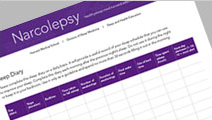
It is important to obtain enough sleep before the tests. A doctor may request that a patient keep a sleep diary for one to two weeks before the tests to be certain that insufficient sleep is not a contributing factor. Download the printable Sleep Diary (PDF) to track your sleeping patterns. During this period the doctor might also want to measure a patient’s activity using a technique known as wrist-based actigraphy. For this, the patient is asked to wear a device resembling a wristwatch that records body movements to estimate amounts of sleep.
If someone has a tendency to routinely sleep later than 8 a.m., the doctor may recommend changes to the sleep schedule or timing of the sleep tests.
Understanding test results
Your physician may ask you to keep a sleep diary to help assess your sleep patterns
In people with narcolepsy, the overnight polysomnogram is often normal. However, about one-third of patients with narcolepsy with cataplexy will enter REM sleep within 15 minutes after falling asleep, and this is considered very supportive of a diagnosis of narcolepsy.1
The polysomnogram may also show that an individual dozes off in less than five minutes or has greater-than-normal amounts of light non-REM sleep, but these phenomena are not decisive for a diagnosis. This test is also helpful in identifying any additional sleep disorders (for example, sleep apnea or periodic limb movements in sleep) that could contribute to poor quality sleep.
If someone has narcolepsy, the MSLT usually reveals that the person falls asleep rapidly (in less than eight minutes on average across the naps) and enters REM sleep during two or more naps. This pattern on the MSLT is considered highly suggestive of narcolepsy. In contrast, most people without narcolepsy take much longer to fall asleep during naps, and if they do fall asleep, they rarely enter REM sleep. The MSLT results can highlight two major indicators of narcolepsy:
People with narcolepsy can fall asleep quickly, even after a good night’s sleep.
People with narcolepsy have impaired regulation of REM sleep. Normally, REM sleep occurs only during the night, but in people with narcolepsy, it can occur at any time of day.
Sometimes the results of the MSLT are unclear, and a doctor may recommend repeating the test if he or she thinks narcolepsy is likely.
Other tests
In rare instances, physicians may recommend checking spinal fluid for evidence of hypocretin loss. Although this test is considered experimental, it may become more widely available in the future.
Occasionally a doctor may recommend checking the level of orexin-A in the spinal fluid. This test is very specific for narcolepsy, as hypocretin levels are low in almost no other condition. The test requires a lumbar puncture (spinal tap) to collect the fluid, and can make the diagnosis much clearer in some children, in adults who have unusual cataplexy, and in anyone who cannot discontinue medications that interfere with the MSLT. This test is now available through Mayo Labs.
Although most people who have narcolepsy carry a genetic marker (HLA-DQB1*06:02) associated with the disorder, this gene is only a predisposing factor to developing narcolepsy. Testing for it will not confirm a diagnosis of the disorder. In fact, this gene is moderately common in the general population, so it provides only modest diagnostic evidence. Still, some doctors find the test helpful when symptoms are atypical.
Self Care
The Takeaway
Narcolepsy is usually treated with behavioral strategies plus carefully chosen medications.
Behavioral strategies include taking daytime naps and staying active.
Establishing good sleep habits is key, including developing a consistent sleep schedule, keeping the bedroom quiet and comfortable, and avoiding caffeine or medications in the evening that may interfere with sleep.
“Many people with narcolepsy, when adequately treated, can live normal lives.”
-Dr. Douglas Kirsch
Narcolepsy can make people feel as if their lives have unraveled, but with optimal treatment, the disorder is manageable, and most people can lead productive lives. Treatment usually consists of two main approaches: behavioral strategies (such as short naps to reduce sleepiness and staying active to keep alert), plus carefully chosen medications to improve alertness and cataplexy.
Behavioral strategies
Most people with narcolepsy need medications to feel more alert, but there are several things you can do for yourself to increase alertness. Many people find the following suggestions helpful in establishing a successful routine:
Take daytime naps. Most people with narcolepsy find a brief nap refreshing, with improved alertness for one to three hours afterwards. Naps should be limited to 15–20 minutes, as it can be difficult to wake from the deep sleep of a long nap, and an extended nap in the afternoon may make it harder to fall asleep at night. Try to schedule the nap around the time you find it most difficult to stay awake; for many people this is about 2–3 p.m. If you have severe sleepiness, an additional nap in the late morning may also be helpful. To improve their alertness, some people with narcolepsy find it helpful to take a nap before driving.
Dr. Scammell talks about the value of naps in treating narcolepsy.
Regular exercise and a good diet promote general health and alertness for people with narcolepsy.
Stay active. Sitting still for long periods can make anyone a bit drowsy, and this is doubly so for people with narcolepsy. A brief walk often improves alertness. Students may want to sit toward the back of the class so they can stand up and move around to stay alert.
Establish good sleep habits. Almost everyone feels sleepy after a poor night’s rest, and this is especially true for people with narcolepsy. How much sleep is optimal for you? How much do you sleep on a quiet weekend or a long vacation? Most adults need about 8 hours of sleep, and growing teens often need 9–10 hours of sleep. The following tips may be helpful when trying to establish good sleep habits:
Set consistent times to go to sleep, and get up so your body and brain get into a regular routine.
Keep your bedroom quiet and comfortable. Keep any distracting electronic devices, such as a cell phone, computer, or TV, out of the bedroom.
If you do wake during the night, avoid stimulating activities such as checking email or watching TV. Some people find it easier to get back to sleep if they listen to quiet music or read a magazine for 10 minutes.
If you need to take a wake-promoting medication in the afternoon, ask your doctor about taking a short-acting form so the medication has worn off by bedtime.
Avoid stimulants such as coffee in the late afternoon and evening.
Avoid sedating medications and heavy meals. Some medications, including many used for allergies, depression, anxiety, or seizures, can cause or increase sleepiness. If you are taking other medications, talk with your doctor about whether any of them may be a concern. Some people with narcolepsy feel especially drowsy after eating a big meal, particularly one rich in carbohydrates, so think about making your meals smaller.
Consider your caffeine use. Some people with narcolepsy find coffee or other caffeinated beverages helpful to staying awake. For others, coffee is ineffective, or, in combination with stimulant medications, it can cause jitteriness, diarrhea, anxiety, or a racing heart. If coffee is part of your daily routine, it is best to avoid drinking it after 4 p.m., as the caffeine can make it harder to get enough sleep at night.
In regards to cataplexy, medications are usually the most effective way to manage this symptom, but some behavioral strategies may also help:
Monitor your caffeine use. It may interact with medications and disrupt nighttime sleep.Get enough sleep. Many people with narcolepsy report that they are more likely to get cataplexy if they are tired, so get enough sleep at night. Some people can sense when they are on edge to develop cataplexy, and this tendency can be reduced by a short nap.
Enlist help from friends and family. If your cataplexy is brought on by specific triggers or situations such as joking or tickling, encourage your friends and family to avoid these during critical times. Avoiding strong emotions is not a pleasant way to go through life, but if cataplexy is about to occur at an awkward time, it can help if you relax and tone down your emotions.
Medications
The Takeaway
Medications are a core therapy for most people with narcolepsy. The ultimate goal is to identify medications that produce the greatest benefits with the fewest problems; finding the right balance can take time.
Sleepiness often improves with modafinil, armodafinil, amphetamines, or oxybates.
Cataplexy often improves with antidepressants or oxybates.
Medications are a core therapy for most people with narcolepsy, and with optimal treatment, most of them experience large improvements in their alertness. The greatest improvements occur when medications have been optimized, behavioral strategies are used thoughtfully, and any additional sleep disorders are brought under control.
The ultimate goal is to identify medications that produce the greatest benefits with the fewest problems. This can take persistence, as sometimes the first choice is not the best. A reasonable target is to attain normal alertness through much of the day, especially at critical times such as during school or work or when driving.
A summary of medications used to treat narcolepsy and some of their possible side effects can be found in Medications for Narcolepsy (PDF).
Dr. Scammell describes the broad classes of medications used to treat narcolepsy.
A variety of medications are available to treat both sleepiness and cataplexy.
Medications for improving alertness
Medications can help a person with narcolepsy maintain normal or near-normal alertness during the workday.
For people with mild to moderate sleepiness, modafinil or armodafinil are often good choices. For people with more severe sleepiness, however, amphetamines or oxybates often produce the best results. All these medications have the potential to produce side effects, including some that are severe, so they should only be used as recommended by a doctor.
Some of these medications, such as amphetamines and gamma-hydroxybutyrate (the active ingredient of oxybates), have the potential to be abused. People using high doses recreationally can become addicted and dependent, requiring higher doses of the drug and exhibiting signs of withdrawal when the drug is discontinued. However, addiction or abuse seems very rare in people with narcolepsy taking these medications regularly at the appropriate doses.1,2
Modafinil/armodafinil. Modafinil, a very effective and popular medication for reducing sleepiness in narcolepsy, now comes in two forms: 1) the original formulation (Provigil or generic modafinil) is a mixture of active and inactive compounds, and 2) the newer form (Nuvigil or armodafinil) is the purified active compound.
Modafinil likely increases alertness by increasing brain levels of dopamine, a wake-promoting chemical in the brain.
Large clinical studies have shown that modafinil and armodafinil reduce feelings of sleepiness as measured by the Epworth Sleepiness Scale, and moderately improve the ability to stay awake on the Maintenance of Wakefulness Test (MWT).3,4,5
Modafinil usually improves alertness for about eight hours, so most people find it convenient to take the medication in the morning. Some people find that it wears off in the early afternoon and may prefer to take half of the prescribed dose in the morning and the other half after lunch.
Overall, modafinil produces fewer side effects than some of the other wake-promoting medications, but it can cause headache, nausea, and occasionally insomnia. Very rarely, it can produce a severe and dangerous rash that warrants immediate medical attention. Modafinil also makes birth control pills much less effective, so women taking modafinil should use an alternate method of birth control.
This two-page PDF provides detailed information on medications used to treat symptoms of narcolepsy.
Amphetamines and related medications. Since the 1930s, amphetamines have been used to improve alertness in narcolepsy and other conditions. These medications are among the most effective for reducing sleepiness, but side effects are moderately common.
A large variety of amphetamines are clinically available, and individuals may respond better to one than to another. Some of the most common are dextroamphetamine (Dexedrine) and a mixture of amphetamines and dextroamphetamine (Adderall). Methylphenidate (Ritalin, Concerta, Metadate, and Methylin) is closely related to the amphetamines and has similar benefits and side effects.
All these medications improve alertness by increasing brain levels of dopamine. To a lesser degree they can also increase brain levels of two other wake-promoting chemicals, serotonin and norepinephrine.
Most amphetamines are available in short-acting forms that improve alertness for three to four hours, and longer-acting forms that last for six to eight hours. Many people find it most convenient to take the longer-acting form in the morning and sometimes again at midday, with a shorter-acting pill prior to times when sleepiness is worst, such as in the late morning or afternoon. Individuals should discuss with their doctors the exact timing and dosing of their medications, to reduce the likelihood of side effects.
At reasonable doses, many people can take amphetamines with little trouble, but these medications should be used thoughtfully. People with hypertension or heart problems should not take amphetamines, as they can increase blood pressure and heart rate, trigger heart problems, and, very rarely, cause sudden death. Amphetamines can disrupt sleep, cause headaches or anxiety, and, rarely, trigger altered thinking such as mania or psychosis. Amphetamines can also be abused. For most people this is not a concern, but the medication should be taken only in the way your doctor recommends.
At very high doses, such as those used by people who abuse methamphetamine, amphetamines can injure the brain.6 However, there is no evidence that brain injury occurs in narcolepsy patients who take amphetamines at moderate doses on a regular basis.
Solriamfetol. Solriamfetol (Sunosi) is a newer medication that is taken in the morning and can improve alertness across the day. This drug works by increasing brain levels of norepinephrine and dopamine. Clinical trials have shown that it substantially improves subjective alertness and the ability of people with narcolepsy to stay awake on the Maintenance of Wakefulness Test. It should not be taken with a monamine oxidase inhibitor, and higher doses should not be used in people with impaired kidney function. It is generally well-tolerated, but side effects can include headache, nausea, decreased appetite, increased blood pressure, insomnia and anxiety.
Pitolisant. Pitolisant (Wakix) is another relatively new and unique medication that can improve alertness across the day. It also can reduce cataplexy, hypnagogic hallucination and sleep paralysis. It increases brain levels of histamine, norepinephrine, dopamine and acetylcholine (all of which improve alertness in various ways). It can improve both subjective and objective measures of sleepiness, and its effects can last into the evening. Like modafinil, it can reduce the effectiveness of birth control pills, and an alternate form of birth control should be used. Higher doses should not be used in people with impaired kidney function, and occasionally, it can affect heart function, and your doctor should check an electrocardiogram once you get a stable dose. Side effects are uncommon and include insomnia, nausea and anxiety.
Medications are a core therapy for most people with narcolepsy.
Oxybates. Sodium oxybate (Xyrem), mixed oxybate salts (Xywav), and once-nightly sodium oxybate (Lumryz) are forms of gamma-hydroxybutyrate (GHB), a naturally occurring substance in the brain. Oxybates are quite different from the other medications used to treat narcolepsy. Instead of a pill taken during the day, oxybates are a sedating liquid taken at bedtime. As its effects last only a few hours, a second dose is taken three to four hours later, though with the once-nightly version, it is dosed only at bedtime. Oxybates produce deep sleep through much of the night, and after several weeks of regular use, they usually improve daytime sleepiness and cataplexy.
Doctors generally start oxybates at a low to moderate dose, and then slowly increase the dose over a period of several weeks, if needed.
The mechanism through which oxybates improve sleepiness and cataplexy is not well understood. Research in animals indicates that oxybates produce sedation by binding to receptors for the neurotransmitter GABA. 7 How alertness and cataplexy improve over time is unknown; it is probably not a consequence of deeper sleep, as other sedating medications do not improve the symptoms of narcolepsy.
Several clinical studies have shown that oxybates can reduce feelings of sleepiness as measured by the Epworth Sleepiness Scale.7,9, 10, 11 With oxybates, people with narcolepsy generally stay awake longer during the Maintenance of Wakefulness Test, although they still fall asleep faster than normal.1, 8 The combination of oxybates and modafinil may be even more effective.12
The effects of oxybates on cataplexy is discussed in the Medications for improving cataplexy section of this website.
Oxybates can produce a variety of side effects, including headache, nausea, or dizziness, especially if the person taking it wakes one to two hours after use. Uncommonly, oxybates can produce confusion or depression during the day. It is often quite sedating, so individuals should determine whether they can wake adequately if a child needs attention, a smoke alarm sounds, or they need to go to the bathroom during the night.
Oxybates should never be used in conjunction with alcohol or other sedating medications because the combination is associated with adverse reactions, such as difficulty breathing or coma. Some people with narcolepsy also have sleep apnea, and there is controversy as to whether oxybates can worsen this condition. Some doctors find it helpful to re-evaluate sleep apnea in people taking oxybates.
Oveporexton. Oveporexton (Orzeyful) is the newest medication that has been developed to improve the daytime sleepiness associated with narcolepsy. It is a orexin receptor 2 agonist and acts to correct the orexin deficiency occurring in Type 1 narcolepsy. Clinical trials have shown that it improves daytime sleepiness and the ability to remain alert on the Mainenance of Wakefulness Test. It also can reduce cataplexy as well as hypnogogic hallucinations and sleep paralysis. Major side effects are insomnia and the need to urinate frequently and urgently. It interacts with CPY3A medications (examples: ketoconazole, erythromycin, diltiazem) and may require dosage reduction if administered together with such medications.
Medications for improving cataplexy
Cataplexy occurs in about half of all people with narcolepsy. Among those who have it, some may have only one or two episodes in their whole lives, while others can have 10 or 20 episodes each day. Thus, the decision whether to treat cataplexy with a medication depends on how much impact the cataplexy has on an individual’s life and the expected risks of the medications.
Medications can produce a 90% reduction in cataplexy, and in some patients eliminate it entirely. As cataplexy can have a major impact on social interactions, and sometimes safety, treatment can substantially improve quality of life.
Most of the time, hypnagogic hallucinations and sleep paralysis do not require treatment with medications. However, these symptoms often improve with the medications that reduce cataplexy.
Dr. Kirsch discusses the role of medications in treating narcolepsy.
Antidepressants. Antidepressant medications have been used for decades to reduce cataplexy. As there have been no large clinical studies examining the effects of these medications on cataplexy, guidelines on their use are mainly based on the clinical experience of narcolepsy specialists.13
The rationale for using antidepressants is that these medications strongly suppress rapid eye movement sleep, and cataplexy is probably the occurrence of REM sleep paralysis during wakefulness. Antidepressants mainly suppress cataplexy by increasing levels of norepinephrine and serotonin in the brain.
Venlafaxine (Effexor) is one of the most commonly used medications for reducing cataplexy because the dosing is convenient, side effects are uncommon, and it is often very effective. Venlafaxine increases brain levels of both norepinephrine and serotonin.
Fluoxetine (Prozac) is also generally well tolerated and long lasting. It increases brain levels of serotonin and may be slightly less effective than venlafaxine in reducing cataplexy.
Clomipramine (Anafranil) and protriptyline (Vivactil) are very potent in suppressing cataplexy, but they can produce dry mouth, constipation, and other bothersome side effects. Thus, one or the other is often used as an add-on medication for additional cataplexy control. For example, some patients may take venlafaxine as their daily medication for reducing cataplexy, and also take a low dose of clomipramine just before a party for additional protection. People with heart problems, seizures, or glaucoma should not take clomipramine or protriptyline.
Sudden discontinuation of any of these antidepressant medications can produce rebound cataplexy: severe cataplexy that can last several hours. If someone wishes to stop one of these medications, the dose should be gradually reduced.
Audrey finds that medications help manage her cataplexy.
Oxybates. Oxybates are also very effective in reducing cataplexy. Information on dosing and side effects of this medication can be found in the Medications for improving alertness section of this website.
The mechanism through which oxybates improve cataplexy is unknown. In contrast to the antidepressants, oxybates strongly reduce cataplexy, but they do not reduce REM sleep.
Large clinical studies have shown that oxybates potently reduce cataplexy. In people taking higher doses of oxybates, the average number of cataplexy attacks decreased by 70–85%; people taking lower doses had moderate decreases in cataplexy.9,11
Even when the dose of oxybates is held steady, it can take up to eight weeks for improvements in cataplexy to become fully apparent.
In contrast to the antidepressants, sudden discontinuation of oxybates do not produce rebound cataplexy. Instead, cataplexy just gradually returns to its baseline level over one to two weeks.
Oveporexton. In addition to improving daytime sleepiness and alertness, oveporexton (Orzeyful) in clinical trials has been shown to reduce the frequency of cataplexy as well as hypnagogic hallucinations and sleep paralysis. It is an orexin receptor 2 agonist and directly activates the receptor responsible for the orexin deficiency associated with narcolepsy type 1.
Changes Across the Lifespan
The Takeaway
Younger children, because of their smaller size and higher metabolism, may need different dosing of medications than teens and adults.
Prior to and during pregnancy, many women choose to stop their narcolepsy medications, as these could affect fetal development.
Elderly patients may need adjustments to medications based on their other medical conditions.
As life changes, whether transitioning from high school to college or switching to a new job with different work hours, some adjustments to behavioral strategies may be helpful in order to continue managing the symptoms of narcolepsy. In addition, at some life stages additional factors should be taken into account when considering various medication strategies.
In Children
Managing narcolepsy at different periods of life may call for adjustments to behavioral strategies and medication regimens.
Children differ from adults in many ways, including how medications affect them. Because of their smaller size, younger children may need lower doses. The timing of medications may also differ, as children can metabolize some medications quickly.
Amphetamines can slow the rate of growth, especially in younger children.1 This effect is small, and most evidence suggests that a child will resume his or her expected rate of growth after medications are discontinued.
On the other hand, oxybates can increase production of growth hormones,2, 3 although whether this impacts height or weight in children with narcolepsy remains unclear.
During pregnancy
Pregnant women with narcolepsy should talk with medical providers about whether to continue their medications.
All drugs used to treat narcolepsy carry some risk to fetal development, and women should discuss with their doctors whether to continue their medications during pregnancy. The US Food and Drug Administration categorizes the medications in the Medications for Narcolepsy chart (PDF) as Pregnancy Category C, which means that studies in animals have shown some adverse effect on the fetus. There are no adequate and well-controlled studies in humans, however. One exception are oxybates, which is Category B (animal studies have not found adverse effects on the fetus, but there are no adequate and well-controlled studies in humans).
Many doctors recommend that medications used for narcolepsy should be stopped prior to and during pregnancy unless the risks of sleepiness outweigh the risks of the medications. For example, one woman might be able to function well simply with more frequent naps during the day. Alternately, another woman might choose to continue her medications if she cannot do her job without them.
Women with cataplexy should tell their obstetricians they have narcolepsy, as rarely, cataplexy can occur during labor, making childbirth problematic.
In older patients
Narcolepsy is a lifelong condition. Symptoms are generally stable across adulthood, though sleepiness and cataplexy may improve slightly with age.4 Sleepiness that worsens in adulthood may be caused by the sedating effects of medications or the development of an additional sleep disorder such as obstructive sleep apnea.
With retirement, it may be easier to fit in one or two naps during the day, allowing an individual to reduce the doses of wake-promoting medications.
With age, other medical problems become more common, and some of the standard narcolepsy medications should be avoided. For example, individuals with heart disease should avoid amphetamines and reconsider antidepressant use, as these can cause high blood pressure and irregular heart rhythms. Sodium oxybate contains a moderate amount of sodium and should be avoided by people on a low-salt diet for high blood pressure or heart failure; mixed oxybate salts may be a better alternative.
Elderly people can become confused or unsteady on their feet, so it may be helpful to reduce the doses of, or discontinue, medications such as amphetamines or oxybates. Protriptyline and clomipramine should be avoided in people with heart problems, seizures, or glaucoma.
Association with Other Medical Conditions
Emerging evidence indicates that narcolepsy with cataplexy (Type 1 Narcolepsy) is associated with an increased risk of developing hypertension and cardiovascular disease.5-7 There also appears to be a greater risk of diabetes and hyperlipidemia.7Obstructive sleep apnea is more common among persons with narcolepsy as well.8 Why this occurs is not entirely known, but it is possible that deficiency in orexin/hypocretin results in abnormalities in physiologic control of the body’s cardiovascular and metabolic systems.9 Routine assessment of cardiovascular and metabolic health should be a routine part of the management of narcolepsy.
Developing New Treatments
The Takeaway
With an improved understanding of narcolepsy, researchers are now developing novel methods for treating the disorder.
Some programs are investigating ways to increase brain levels of histamine, a wake-promoting neurotransmitter.1
Other laboratories are developing methods to restore orexin signaling in the brain.
Over the past 10 years, researchers have made great advances in understanding the underlying biology of narcolepsy, and these insights are now leading to new and possibly more effective treatments for narcolepsy. Some current research programs to develop innovative treatments are described below.
Modulating GABA signaling
Some researchers hypothesize that narcolepsy and related disorders of excessive sleepiness may be caused by a chemical in the brain that enhances signaling by GABA. In general, drugs that increase GABA signaling are sedating, and research suggests that some people with narcolepsy have evidence of enhanced GABA signaling, though this is debated.4–6 Clarithromycin, flumazenil, and pentylenetetrazole can block GABA receptors. Although most patients treated with these drugs had other forms of excessive sleepiness, some had narcolepsy. Clinical trials are now underway to test the efficacy of these drugs.
Dr. Scammell outlines some current themes in narcolepsy research.
Dr. Christian Burgess has worked at Harvard Medical School to unravel the neurobiology of narcolepsy.
Restoring orexin signaling
Narcolepsy with cataplexy is caused by a loss of the brain cells that produce orexin. Research in animal models of narcolepsy suggests that excellent improvements in all symptoms could be obtained by restoring orexin signaling. However, this is a challenge in clinical practice, as the orexins are relatively large molecules that cannot easily get into the brain. Some pharmaceutical companies are now developing drugs that mimic the effects of orexins, and the first of these (oveporexton) is now approved by the FDA and others should be available in the coming years.7 Early research in people with narcolepsy also looks promising and clinical trials are now recruiting patients to study these drugs further.
Other methods being considered include gene therapy and stem cells. For example, other cells in the brain could be coaxed to produce orexins to make up for the loss of the normal orexin-producing neurons. This approach has been very effective in reducing cataplexy and sleepiness in experiments using mice with narcolepsy.2, 3
In addition, one could reintroduce new orexin-producing cells into the brain using stem cell techniques. This method would take an individual’s own cells, convert them into orexin-producing cells in the lab, and then place these cells into the brain to restore orexin signaling. Treatments for narcolepsy based on gene therapy or stem cells are exciting, but they could fail and produce harmful side effects if people with narcolepsy have an immune response to the orexin peptides. Much more research is needed before these can be developed into safe and effective treatments for people with narcolepsy.
Treatments for narcolepsy based on gene therapy or stem cells are exciting, as they could produce lasting improvements without the side effects of current medications. Much more research is needed before these can be developed into safe and effective treatments for people with narcolepsy.
References
Symptoms of Narcolepsy
Andlauer O, Moore H 4th, Hong SC, Dauvilliers Y, Kanbayashi T, Nishino S, Han F, Silber MH, Rico T, Einen M, Kornum BR, Jennum P, Knudsen S, Nevsimalova S, Poli F, Plazzi G, Mignot E. Predictors of hypocretin (orexin) deficiency in narcolepsy without cataplexy. Sleep 2012; 35:1247–55F.
Overeem S, van Nues SJ, van der Zande WL, Donjacour CE, van Mierlo P, Lammers GJ. The clinical features of cataplexy: a questionnaire study in narcolepsy patients with and without hypocretin-1 deficiency. Sleep Med 2011; 12:12–8.
Plazzi G, Pizza F, Palaia V, Franceschini C, Poli F, Moghadam KK, Cortelli P, Nobili L, Bruni O, Dauvilliers Y, Lin L, Edwards MJ, Mignot E, Bhatia KP. Complex movement disorders at disease onset in childhood narcolepsy with cataplexy. Brain 2011; 134:3480–92.
Science of Narcolepsy
de Lecea L, Kilduff TS, Peyron C, Gao X, Foye PE, Danielson PE, Fukuhara C, Battenberg EL, Gautvik VT, Bartlett FS 2nd, Frankel WN, van den Pol AN, Bloom FE, Gautvik KM, Sutcliffe JG. The hypocretins: hypothalamus-specific peptides with neuroexcitatory activity. Proc Natl Acad Sci USA 1998; 95:322–7.
Sakurai T, Amemiya A, Ishii M, Matsuzaki I, Chemelli RM, Tanaka H, Williams SC, Richardson JA, Kozlowski GP, Wilson S, Arch JR, Buckingham RE, Haynes AC, Carr SA, Annan RS, McNulty DE, Liu WS, Terrett JA, Elshourbagy NA, Bergsma DJ, Yanagisawa M. Orexins and orexin receptors: a family of hypothalamic neuropeptides and G protein-coupled receptors that regulate feeding behavior. Cell 1998; 92:573–85.
Pelin Z, Guilleminault C, Risch N, Grumet FC, Mignot E. HLA-DQB1*0602 homozygosity increases relative risk for narcolepsy but not disease severity in two ethnic groups. US Modafinil in Narcolepsy Multicenter Study Group. Tissue Antigens 1998; 51:96–100.
Aran A, Lin L, Nevsimalova S, Plazzi G, Hong SC, Weiner K, Zeitzer J, Mignot E. Elevated anti-streptococcal antibodies in patients with recent narcolepsy onset. Sleep 2009; 32:979–83.
Han F, Lin L, Warby SC, Faraco J, Li J, Dong SX, An P, Zhao L, Wang LH, Li QY, Yan H, Gao ZC, Yuan Y, Strohl KP, Mignot E. Narcolepsy onset is seasonal and increased following the 2009 H1N1 pandemic in China. Ann Neurol 2011; 70:410–7.
Partinen M, Saarenpaa-Heikkila O, Ilveskoski I, Hublin C, Linna M, Olsen P, Nokelainen P, Alen R, Wallden T, Espo M, Rusanen H, Olme J, Satila H, Arikka H, Kaipainen P, Julkunen I, Kirjavainen T. Increased incidence and clinical picture of childhood narcolepsy following the 2009 H1N1 pandemic vaccination campaign in Finland. PLoS ONE 2012; 7:e33723.
Nohynek H, Jokinen J, Partinen M, Vaarala O, Kirjavainen T, Sundman J, Himanen SL, Hublin C, Julkunen I, Olsen P, Saarenpaa-Heikkila O, Kilpi T. AS03 adjuvanted AH1N1 vaccine associated with an abrupt increase in the incidence of childhood narcolepsy in Finland. PLoS ONE 2012; 7:e33536.
Dauvilliers Y, Arnulf I, Lecendreux M, Monaca Charley C, Franco P, Drouot X, d’Ortho MP, Launois S, Lignot S, Bourgin P, Nogues B, Rey M, Bayard S, Scholz S, Lavault S, Tubert-Bitter P, Saussier C, Pariente A. Increased risk of narcolepsy in children and adults after pandemic H1N1 vaccination in France. Brain 2013; 136:2486–96.
Lin L, Faraco J, Li R, Kadotani H, Rogers W, Lin X, Qiu X, de Jong PJ, Nishino S, Mignot E. The sleep disorder canine narcolepsy is caused by a mutation in the hypocretin (orexin) receptor 2 gene. Cell 1999; 98:365–76.
Beuckmann CT, Sinton CM, Williams SC, Richardson JA, Hammer RE, Sakurai T, Yanagisawa M. Expression of a poly-glutamine-ataxin-3 transgene in orexin neurons induces narcolepsy-cataplexy in the rat. J Neurosci 2004; 24:4469–77.
Chemelli RM, Willie JT, Sinton CM, Elmquist JK, Scammell T, Lee C, Richardson JA, Williams SC, Xiong Y, Kisanuki Y, Fitch TE, Nakazato M, Hammer RE, Saper CB, Yanagisawa M. Narcolepsy in orexin knockout mice: molecular genetics of sleep regulation. Cell 1999; 98:437–51.
Mochizuki T, Crocker A, McCormack S, Yanagisawa M, Sakurai T, Scammell TE. Behavioral state instability in orexin knock-out mice. J Neurosci 2004; 24:6291–300.
Foutz AS, Delashaw JB Jr., Guilleminault C, Dement WC. Monoaminergic mechanisms and experimental cataplexy. Ann Neurol 1981; 10:369–76.
Oishi Y, Williams RH, Agostinelli L, Arrigoni E, Fuller PM, Mochizuki T, Saper CB, Scammell TE. Role of the medial prefrontal cortex in cataplexy. J Neurosci 2013; 33:9743–51.
Thannickal TC, Moore RY, Nienhuis R, Ramanathan L, Gulyani S, Aldrich M, Cornford M, Siegel JM. Reduced number of hypocretin neurons in human narcolepsy. Neuron 2000; 27:469–74.
Peyron C, Faraco J, Rogers W, Ripley B, Overeem S, Charnay Y, Nevsimalova S, Aldrich M, Reynolds D, Albin R, Li R, Hungs M, Pedrazzoli M, Padigaru M, Kucherlapati M, Fan J, Maki R, Lammers GJ, Bouras C, Kucherlapati R, Nishino S, Mignot E. A mutation in a case of early onset narcolepsy and a generalized absence of hypocretin peptides in human narcoleptic brains. Nat Med 2000; 6:991–7.
Crocker A, Espana RA, Papadopoulou M, Saper CB, Faraco J, Sakurai T, Honda M, Mignot E, Scammell TE. Concomitant loss of dynorphin, NARP, and orexin in narcolepsy. Neurology 2005; 65:1184–8.
Mignot E, Lammers G, Ripley B, Okun M, Nevsimalova S, Overeem S, Vankova J, Black J, Harsh J, Bassetti C, Schrader H, Nishino S. The role of cerebrospinal fluid hypocretin measurement in the diagnosis of narcolepsy and other hypersomnias. Arch Neurol 2002; 59:1553–62.
Thannickal TC, Nienhuis R, Siegel JM. Localized loss of hypocretin (orexin) cells in narcolepsy without cataplexy. Sleep 2009; 32:993–8.
Andlauer O, Moore H 4th, Hong SC, Dauvilliers Y, Kanbayashi T, Nishino S, Han F, Silber MH, Rico T, Einen M, Kornum BR, Jennum P, Knudsen S, Nevsimalova S, Poli F, Plazzi G, Mignot E. Predictors of hypocretin (orexin) deficiency in narcolepsy without cataplexy. Sleep 2012; 35:1247–55F.
Latorre D, Kallweit U, Armentani E, Foglierini, Mele F, Cassotta A, Jovic S, Jarrossay D, Mathis J, Zelli F, Becher B, Lanzavecchia A, Khatami R, Manconi M, Tafti M, Bassetti CL, Sallusto F. T cells in patients with narcolepsy target self-antigens of hypocretin neurons. Nature. 2018; 562:63-8.
Kornum BR, Burgdorf KS, Holm A, Ullum H, Jennum P, Knudsen S. Absence of autoreactive CD4_ T cells targeting HLA-DQA1*:02/DQB1*06:02 restricted hypocretin/orexin eipitopes in narcolepsy type 1 when detected by EliSpot. J Neuroimmunol. 2017; 309:7-11.
Luo G, Lin L, Jacob L, Bonvalet M, Ambati A, Plazzi G, Pizza F, Leib R, Adams CM, Partinen M, Mignot EJ. Absence of anti-hypocretin receptor 2 autoantibodies in post Pandemrix narcolepsy cases. PLoS One. 2017;12:e0187305.
Cogswell AC, Maski K, Scammell TE, Tucker D, Orban ZS, Koralnik IJ. Children with narcolepsy type 1 have increased T-cell responses to orexins. Ann Clin Transl Neurol. 2019; 6:2566-72.
At School
1. Broughton RJ, Guberman A, Roberts J. Comparison of the psychosocial effects of epilepsy and narcolepsy/cataplexy: a controlled study. Epilepsia 1984; 25:423–33.
Safety
Aldrich MS. Automobile accidents in patients with sleep disorders. Sleep 1989; 12:487–94.
Watson NF, Ton TG, Koepsell TD, Gersuk VH, Longstreth WT Jr. Does narcolepsy symptom severity vary according to HLA-DQB1*0602 allele status? Sleep 2010; 33:29–35.
Broughton R, Ghanem Q, Hishikawa Y, Sugita Y, Nevsimalova S, Roth B. Life effects of narcolepsy in 180 patients from North America, Asia and Europe compared to matched controls. Can J Neurol Sci 1981; 8:299–304.
Findley LJ, Suratt PM, Dinges DF. Time-on-task decrements in “steer clear” performance of patients with sleep apnea and narcolepsy. Sleep 1999; 22:804–9.
Littner MR, Kushida C, Wise M, Davila DG, Morgenthaler T, Lee-Chiong T, Hirshkowitz M, Daniel LL, Bailey D, Berry RB, Kapen S, Kramer M. Practice parameters for clinical use of the multiple sleep latency test and the maintenance of wakefulness test. Sleep 2005; 28:113–21.
Broughton RJ, Guberman A, Roberts J. Comparison of the psychosocial effects of epilepsy and narcolepsy/cataplexy: a controlled study. Epilepsia 1984; 25:423–33.
Self Evaluation
Johns MW. A new method for measuring daytime sleepiness: the Epworth sleepiness scale. Sleep 1991; 14:540–5.
Getting a Diagnosis of Narcolepsy
Frauscher B, Ehrmann L, Mitterling T, Gabelia D, Gschliesser V, Brandauer E, Poewe W, Högl B. Delayed diagnosis, range of severity, and multiple sleep comorbidities: a clinical and polysomnographic analysis of 100 patients of the Innsbruck narcolepsy cohort. J Clin Sleep Med 2013; 9:805–12.
Schuld A, Hebebrand J, Geller F, Pollmacher T. Increased body-mass index in patients with narcolepsy. Lancet 2000; 355:1274–5.
Dahmen N, Bierbrauer J, Kasten M. Increased prevalence of obesity in narcoleptic patients and relatives. Eur Arch Psychiatry Clin Neurosci 2001; 251:85–9.
Poli F, Pizza F, Mignot E, Ferri R, Pagotto U, Taheri S, Finotti E, Bernardi F, Pirazzoli P, Cicognani A, Balsamo A, Nobili L, Bruni O, Plazzi G. High prevalence of precocious puberty and obesity in childhood narcolepsy with cataplexy. Sleep 2013; 36:175–81.
Roth B, Nevsimalova S. Depression in narcolepsy and hypersomnia. Schweiz Arch Neurol Neurochir Psychiatr 1975; 116:291–300.
Fortuyn HA, Lappenschaar MA, Furer JW, Hodiamont PP, Rijnders CA, Renier WO, Buitelaar JK, Overeem S. Anxiety and mood disorders in narcolepsy: a case-control study. Gen Hosp Psychiatry 2010; 32:49–56.
Dimitrova A, Fronczek R, Van der Ploeg J, Scammell T, Gautam S, Pascual-Leone A, Lammers GJ. Reward-seeking behavior in human narcolepsy. J Clin Sleep Med 2011; 7:293–300.
Testing for Narcolepsy
Andlauer O, Moore H, Jouhier L, Drake C, Peppard PE, Han F, Hong SC, Poli F, Plazzi G, O’Hara R, Haffen E, Roth T, Young T, Mignot E. Nocturnal rapid-eye-movement sleep latency for identifying patients with narcolepsy/hypocretin deficiency. JAMA Neurol 2013; 70:891–902.
Medications
US Xyrem Multi-Center Study Group. The abrupt cessation of therapeutically administered sodium oxybate (GHB) does not cause withdrawal symptoms. J Toxicol Clin Toxicol 2003; 41:131–5.
Dauvilliers Y, Bassetti C, Lammers GJ, Arnulf I, Mayer G, Rodenbeck A, Lehert P, Ding CL, Lecomte JM, Schwartz JC; HARMONY I study group. Pitolisant versus placebo or modafinil in patients with narcolepsy: a double-blind, randomised trial. Lancet Neurol 2013; 12:1068–75.
Harsh JR, Hayduk R, Rosenberg R, Wesnes KA, Walsh JK, Arora S, Niebler GE, Roth T. The efficacy and safety of armodafinil as treatment for adults with excessive sleepiness associated with narcolepsy. Curr Med Res Opin 2006; 22:761–74.
Berman SM, Kuczenski R, McCracken JT, London ED. Potential adverse effects of amphetamine treatment on brain and behavior: a review. Mol Psychiatry 2009; 14:123–42.
Vienne J, Bettler B, Franken P, Tafti M. Differential effects of GABA(B) receptor subtypes, {gamma}-hydroxybutyric acid, and baclofen on EEG activity and sleep regulation. J Neurosci 2010; 30:14194–204.
Mamelak M, Black J, Montplaisir J, Ristanovic R. A pilot study on the effects of sodium oxybate on sleep architecture and daytime alertness in narcolepsy. Sleep 2004; 27:1327–34.
US Xyrem Multicenter Study Group. A randomized, double blind, placebo-controlled multicenter trial comparing the effects of three doses of orally administered sodium oxybate with placebo for the treatment of narcolepsy. Sleep 2002; 25:42–9.
US Xyrem Multicenter Study Group. A 12-month, open-label, multicenter extension trial of orally administered sodium oxybate for the treatment of narcolepsy. Sleep 2003; 26:31–5.
Bogan RK, Thorpy MJ, Dauvilliers Y, Partinen M, Del Rio Villegas R, Foldvary-Schaefer N, Skowronski R, Tang L, Skobieranda F, Šonka K. Efficacy and safety of calcium, magnesium, potassium, and sodium oxybates (lower-sodium oxybate [LXB]; JZP-258) in a placebo-controlled, double-blind, randomized withdrawal study in adults with narcolepsy with cataplexy. Sleep 2021; 44(3):zsaa206.
Black J, Houghton WC. Sodium oxybate improves excessive daytime sleepiness in narcolepsy. Sleep 2006; 29:939–46.
Morgenthaler TI, Kapur VK, Brown T, Swick TJ, Alessi C, Aurora RN, Boehlecke B, Chesson AL Jr., Friedman L, Maganti R, Owens J, Pancer J, Zak R. Practice parameters for the treatment of narcolepsy and other hypersomnias of central origin. Sleep 2007; 30:1705–11.
Changes Across the Lifespan
Faraone SV, Biederman J, Morley CP, Spencer TJ. Effect of stimulants on height and weight: a review of the literature. J Am Acad Child Adolesc Psychiatry 2008; 47:994–1009.
Van Cauter E, Plat L, Scharf MB, Leproult R, Cespedes S, L’Hermite-Baleriaux M, Copinschi G. Simultaneous stimulation of slow-wave sleep and growth hormone secretion by gamma-hydroxybutyrate in normal young men. J Clin Invest 1997; 100:745–53.
Donjacour CE, Aziz NA, Frolich M, Roelfsema F, Overeem S, Lammers GJ, Pijl H. Sodium oxybate increases prolactin secretion in narcolepsy patients and healthy controls. Eur J Endocrinol 2011; 164:363–70.
Dauvilliers Y, Gosselin A, Paquet J, Touchon J, Billiard M, Montplaisir J. Effect of age on MSLT results in patients with narcolepsy-cataplexy. Neurology 2004; 62:46–50.
Ben-Joseph RH, Saad R, Black J, Dabrowski EC, Taylor B, Gallucci S, Somers VK. Cardiovascular Burden of Narcolepsy Disease (CV-BOND): a real-world evidence study. Sleep. 2023 Oct 11;46(10):zsad161.
Black J, Reaven NL, Funk SE, McGaughey K, Ohayon MM, Guilleminault C, Ruoff C. Medical comorbidity in narcolepsy: findings from the Burden of Narcolepsy Disease (BOND) study. Sleep Med. 2017 May;33:13-18.
Kaufmann CN, Riaz M, Park H, Lo-Ciganic WH, Wilson D, Wickwire EM, Malhotra A, Bhattacharjee R. Narcolepsy Is Associated With Subclinical Cardiovascular Disease as Early as Childhood: A Big Data Analysis. J Am Heart Assoc. 2025 Jun 17;14(12):e039899.
Cohen A, Mandrekar J, St Louis EK, Silber MH, Kotagal S. Comorbidities in a community sample of narcolepsy. Sleep Med. 2018 Mar;43:14-18. doi: 10.1016/j.sleep.2017.11.1125.
Jennum PJ, Plazzi G, Silvani A, Surkin LA, Dauvilliers Y. Cardiovascular disorders in narcolepsy: Review of associations and determinants. Sleep Med Rev. 2021 Aug;58:101440.
Developing New Treatments
Lin JS, Dauvilliers Y, Arnulf I, Bastuji H, Anaclet C, Parmentier R, Kocher L, Yanagisawa M, Lehert P, Ligneau X, Perrin D, Robert P, Roux M, Lecomte JM, Schwartz JC. An inverse agonist of the histamine H(3) receptor improves wakefulness in narcolepsy: studies in orexin-/- mice and patients. Neurobiol Dis 2008; 30:74–83.
Kantor S, Mochizuki T, Lops S, Ko B, Clain E, Clark E, Yamamoto M, Scammell TE. Orexin gene therapy restores the timing and maintenance of wakefulness in narcoleptic mice. Sleep 2013; 36:1129–38.
Liu M, Blanco-Centurion C, Konadhode R, Begum S, Pelluru D, Gerashchenko D, Sakurai T, Yanagisawa M, van den Pol AN, Shiromani PJ. Orexin gene transfer into zona incerta neurons suppresses muscle paralysis in narcoleptic mice. J Neurosci 2011; 31:6028–40.
Trotti LM, Saini P, Koola C, et al. Flumazenil for the treatment of refractory hypersomnolence: Clinical experience with 153 patients. J Clin Sleep Med. 2016;15:1389-94.
Trotti LM, Saini P, Bliwise DL, et al. Clarithromycin in gamma aminobutyric acid-related hypersomnolence: A randomized crossover trial. Ann Neurol. 2015; 78:454-65.
Dauvilliers Y, Evangelista E, Lopez R, et al. Absence of gamma-aminobutyric acid-a receptor potentiation in central hypersomnolence disorders. Ann Neurol. 2016; 80:259-68.
Dauvilliers Y, Plazzi G, Mignot E, et al. Oveporexton, an Oral Orexin Receptor 2-Selective Agonist, in Narcolepsy Type 1. N Engl J Med. 2025 May 15;392(19):1905-1916..
This content was last reviewed on August 6, 2026. A resource from the Division of Sleep Medicine at Harvard Medical School; Produced in partnership with WGBH Educational Foundation