
Restless Legs Syndrome
Overcoming Restless Legs Syndrome
One Women's Journey
Understanding Restless Legs Syndrome
The Takeaway
- Restless Legs Syndrome (RLS) is a common neurologic condition characterized by an irresistible urge to move the legs.
- RLS can impair the ability to fall sleep leading to worse daytime functioning and a reduction in quality of life.
What Is Restless Legs Syndrome?
Restless legs syndrome (RLS), also known as Willis-Ekbom disease, is a neurologic condition that creates a strong urge to move the legs. People with RLS often describe uncomfortable sensations such as pulling, tingling, creeping, crawling, aching, or burning in the legs.
Symptoms usually happen when resting or attempting to sleep, especially in the evening or at night. Symptoms improve temporarily with movement such as walking or stretching.
RLS can significantly disrupt the ability to fall asleep and is often considered both a neurological and sleep-related movement disorder. RLS is common, affecting 8% of US adults, although severity varies widely from person to person3.
Dr. John Winkelman describes the clinical features of Restless Legs Syndrome.
How RLS Affects Sleep
Because symptoms are typically worse at night, RLS can make it difficult to get restful sleep. Common sleep-related symptoms include:
- Difficulty falling asleep or staying asleep
- Frequent nighttime awakenings
- Nonrestorative (unrefreshing) sleep
- Daytime sleepiness or fatigue
- Difficulty concentrating or remembering things
- Irritability, anxiety, or depression
Some people also experience Periodic Limb Movements of Sleep (PLMS) – repetitive, involuntary leg movements during sleep that can further disrupt sleep.
Impact on Daily Life
When symptoms are frequent or severe, RLS can affect many aspects of daily life, including:
- Difficulty sitting through meetings, movies, or long car or plane trips
- Disrupted sleep for bed partners
- Reduced work or school performance
- Lower overall quality of life
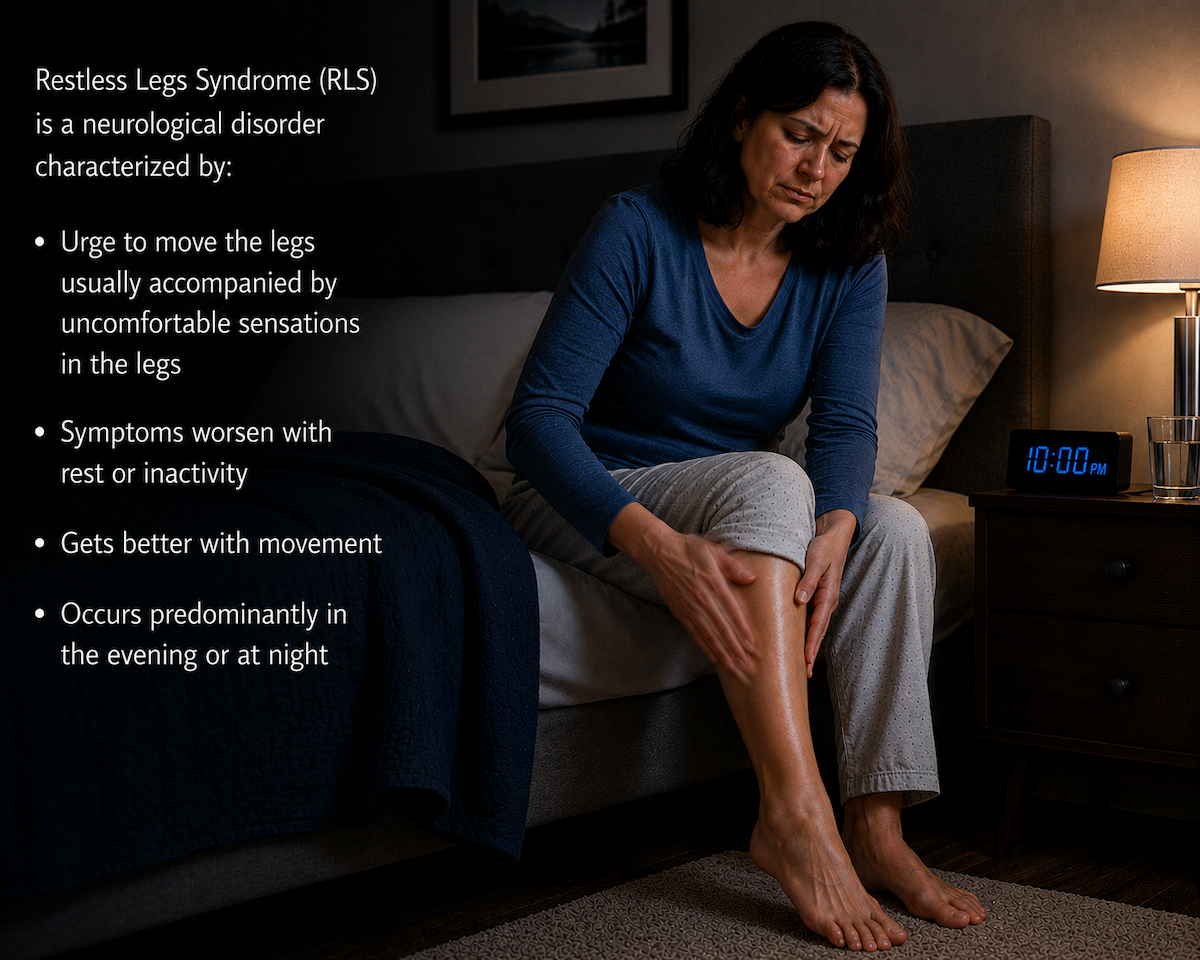
Symptoms of RLS
The Takeaway
- RLS is an uncomfortable urge to move the legs that gets worse during rest, usually occurs in the evening or night, and is temporarily improved with movement of the legs
- RLS often leads to poor sleep and fatigue affecting mood, energy, memory and daytime functioning.
Four Key Features of RLS
RLS symptoms vary. However, the four essential features are:
- An irresistible urge to move 1 or both legs often accompanied by uncomfortable or unpleasant sensations in the legs
- Symptoms that begin or worsen during rest, for example while laying down or sitting
- Symptoms that are worse in the evening or night
- Temporary relief of symptoms with movement of the legs2
Dr. Daniel Picchietti describes symptoms of Restless Legs Syndrome.
Common Sensations
People may describe the feeling as:
Patients describe their Restless Legs Syndrome symptoms.
- Crawling
- Pulling
- Tingling
- Creeping
- Restlessness
- Electric Sensations
- Cramping
- Itching
- Throbbing
- Aching
- Burning
- Painful
How RLS Affects Sleep
Because symptoms are typically worse at night, RLS can make it difficult to get restful sleep. Common sleep-related symptoms include:
- Difficulty falling asleep or staying asleep
- Frequent nighttime awakenings
- Nonrestorative (unrefreshing) sleep
- Daytime sleepiness or fatigue
- Difficulty concentrating or remembering things
- Irritability, anxiety, or depression
Some people also experience Periodic Limb Movements of Sleep (PLMS) – repetitive, involuntary leg movements during sleep that can further disrupt sleep.
Impact on Daily Life
When symptoms are frequent or severe, RLS can affect many aspects of daily life, including:
- Difficulty sitting through meetings, movies, or long car or plane trips
- Disrupted sleep for bed partners
- Reduced work or school performance
- Lower overall quality of life
RLS in Children
The Takeaway
- RLS can occur in children
- Presenting symptoms may be different than in adults and often described as “Creepy-scrawly”, tickling, “bugs/spiders”
- Daytime consequences may include poor school performance, hyperactivity, and behavior problems
Restless legs syndrome occurs children with prevalence estimates between 1.3 and 6.1%. However, presenting symptoms may be different than in adults. Often children describe:
- “Creepy-crawly,” tickling, tingling, itching, pulling, aching, burning, or “bugs/spiders” in the legs
- A feeling of “too much energy” in the legs
- A need to stretch, kick, shake, rub, walk, pace, or run
In addition, they may be observed to have:
- Discomfort while sitting in class, in a car, watching television, or trying to fall asleep
- Trouble settling at bedtime, tossing and turning, or getting out of bed repeatedly
These symptoms often result in poor sleep quality or insufficient sleep. This can result in daytime fatigue, sleepiness, mood changes, hyperactivity, and poor school performance. In young children, RLS can be mistaken for “growing pains”, attention-deficit hyperactivity disorder (ADHD), or other behavioral issues.
A healthcare provider will look at your child’s own description of symptoms, along with medical and family history, and will consider other conditions that can cause similar symptoms. Iron levels are an important part of the evaluation, and iron treatment may be recommended when iron stores are low. Because there is less research on medications for RLS in children, treatment may be tailored to each child and guided by a healthcare provider experienced in treating pediatric RLS1,2,3,4.
Causes and Risk Factors
The Takeaway
- RLS may be inherited, related to low iron, or connected to another medical condition.
- Identifying a contributing cause can help guide treatment.
RLS can develop at any age and occur on its own or as part other conditions. It commonly runs in families, suggesting a genetic contribution. Some people are more likely to develop RLS than others.
Dr. John Winkelman elaborates on the relationship between dopamine, iron and Restless Legs Syndrome.
Common factors associated with RLS
- Iron deficiency or low ferritin: Even iron levels in the low-normal range may matter for some patients.
- Pregnancy, especially in the last trimester
- Kidney disease
- Neuropathy
- Diabetes
- Rheumatoid arthritis
- Vitamin deficiencies
- Sex: Women are affected more often than men.
- Age: RLS can occur at any age, including in children.
- Certain medications that can trigger or worsen symptoms (such as anti-nausea drugs, antipsychotic drugs, antidepressants, some antihistamines)
- Other sleep disorders or disrupted sleep: Conditions such as obstructive sleep apnea, insomnia, circadian rhythm disorders, and insufficient sleep syndrome, can coexist with RLS and contribute to disrupted sleep and daytime symptoms.
Current research suggests that brain iron regulation and dopamine pathways play a key role, although the exact cause is still being studied.
Natural History
The Takeaway
- RLS is often a long-term chronic condition.
- Most people can gain substantial relief with proper evaluation and treatment.
RLS often follows a chronic, relapsing course, meaning symptoms may come and go but can persist over many years. In some people, symptoms become more frequent or intense with age. However, RLS linked to pregnancy often improves after delivery.
The good news is that many patients improve with the right treatment plan. Identifying low iron, adjusting medications that worsen symptoms, using self-care strategies, and choosing appropriate prescription treatment can all make a meaningful difference2,3.
Self-Evaluation
The Takeaway
A self-check is not the same as a diagnosis. RLS should be evaluated by a clinician, especially if symptoms are frequent, worsening, or interfering with sleep or daily life.
Questions to Ask Yourself
You may want to speak with a healthcare professional if you often answer “yes” to questions like these:
- Do you feel a strong urge to move your legs when sitting or lying still?
- Is that urge often accompanied by uncomfortable leg sensations?
- Are symptoms worse when you are resting, such as while sitting or lying down?
- Are symptoms partly or completely relieved by movement, such as walking or stretching?
- Are symptoms worse in the evening or at night?
- Are your symptoms making it harder to fall asleep or stay asleep?
- Do you feel tired, irritable, or unfocused during the day because of poor sleep?
- Do you have a family history of RLS?
- Have you ever been told you have anemia, low iron or low ferritin?
Diagnosis and Testing
The Takeaway
- RLS is diagnosed by the presence of essential clinical features: 1) urge to move the legs, 2) symptoms worse at rest, 3) onset in the evening or at night, 4) temporary improvement with movement of the legs.
- Testing, especially iron studies, is used to rule out other causes and identify treatable contributors3.
There is no single test for RLS. Diagnosis is based on medical history and symptoms.
Diagnostic Features
Clinicians look for a pattern of symptoms, including using the mnemonic “URGE”:
- U: Urge to move the legs, usually with uncomfortable sensations
- R: Rest-induced; symptoms that begin or worsen during rest
- G: Gets better with movement (partial or complete relief)
- E: Evening or night worsening of symptoms
Your provider will also consider whether another medical or behavioral condition could better explain your symptoms2.
Drs. Daniel Picchietti and John Winkelman describe how clinical features are used to diagnose Restless Legs Syndrome.
Clinical Evaluation
In a clinical evaluation, a healthcare provider may:
- Ask about your symptoms, when they occur, and what makes them better or worse
- Ask whether movement relieves your symptoms
- Review your medical history, family history, and current medications
- Perform a physical and neurologic exam
- Order blood tests or other testing when needed
When evaluating children: The child’s own description of their symptoms is especially important. Children may use words such as “need to move,” “want to move,” or “got to kick” to describe their symptoms. Parents or caregivers can also provide helpful information about what they observe, including difficulty settling at bedtime, frequent leg movements, or sleep problems. If a child has difficulty describing the sensations, drawing what the sensations feel like may also be helpful1,3.
Common Lab Tests
Blood tests may be used to look for conditions that can contribute to RLS and to guide treatment.
- Iron studies (most important)
- Iron deficiency is one of the most common and treatable risk factors for RLS.
- Ferritin, a test of iron storage in the body, is important, since serum iron alone can appear normal even when the total iron stores are low.
- Clinicians should check iron studies regularly for people with significant RLS, including ferritin and transferrin saturation (calculated from serum iron and total iron binding capacity).
- Kidney function tests: Kidney disease is a risk factor for RLS.
- Other blood tests (as clinically indicated)
- Vitamin levels (such as B12 and D) and other vitamins and minerals when there is suspected deficiency
- Complete blood count to check for anemia
- Thyroid function test
- Blood sugar testing for diabetes or glucose disorders
Sleep Studies
A sleep study is not required to diagnose RLS. RLS is diagnosed based on your symptoms and medical history. However, an in-lab sleep study (polysomnography or PSG) may be helpful when:
- Periodic Limb Movements of Sleep – PLMS are suspected
- Another sleep disorder may be present
- Symptoms are severe, atypical, or unclear
A PSG can measure leg movements during sleep and evaluate breathing, sleep stages and other aspects of sleep2. If another sleep disorder is suspected, your health care provider may recommend the type of sleep study that is most appropriate for you.
RLS vs. PLMS
RLS and PLMS (Periodic Limb Movements of Sleep) are related but different conditions:
- RLS is diagnosed based on identifying the presence of the essential 4 specific symptoms. PLMS can be present in persons with RLS, but is not required for the diagnosis of RLS.
- PLMS involves repetitive leg or arm movements that occur during sleep and are detected during a sleep study.
- PLMS can occur in people with RLS, but they are not required for an RLS diagnosis. Many people who have PLMS do not have symptoms of RLS.
Mimics
Several other conditions can cause symptoms that may look like RLS. Your healthcare provider will consider these RLS mimics or overlapping conditions when evaluating your symptoms.
Common mimics:
- Positional discomfort or habitual fidgeting
- Sore muscles
- Ligament sprain/tendon strain
- Positional ischemia (numbness)
- Dermatitis
- Bruises
- Growing pains
Less common mimics:
- Leg cramps
- Arthritis
- Other orthopedic disorders
- Peripheral neuropathy
- Radiculopathy
- Myelopathy
- Myopathy
- Fibromyalgia
- Complex regional pain syndrome
- Drug-induced akathisia
- Sickle cell disease1
Lifestyle and Self-care Approaches
The Takeaway
- Healthy routines and symptom-management strategies can reduce discomfort and improve sleep, particularly in mild cases of RLS.
- Avoiding caffeine, alcohol, nicotine and certain medications can help prevent symptom worsening.
Treatment depends on how often symptoms occur, how severe they are, and whether an underlying or reversible cause is identified2.
For people with mild or occasional symptoms, lifestyle and behavioral strategies are often recommended2. These approaches may help reduce symptoms and improve sleep quality.
Drs. Daniel Picchietti and John Winkelman describes lifestyle and self-care approaches to managing RLS symptoms.
Lifestyle Strategies
- Maintain a consistent sleep schedule
- Limit caffeine, especially later in the day
- Limit or avoid alcohol near bedtime
- Avoid nicotine
- Get regular, moderate exercise (preferably earlier in the day)
- Try stretching, massage, cold or warm compresses, or warm baths
- Practice relaxation techniques such as deep breathing or mindfulness
- Stay mentally engaged during long periods of sitting (e.g., reading, puzzles, conversation)
- Avoid heavy meals before bed
- Review medications with a healthcare provider, since some medications can make symptoms wore. These may include certain antidepressants, antihistamines, and medications that affect dopamine levels.
- Treat other sleep disorders: Treating conditions, such as obstructive sleep apnea, getting it evaluated and treated may improve sleep and, potentially, RLS symptoms.
These behavioral strategies are commonly recommended as part of initial management for mild symptoms and may help reduce frequency of symptoms and improve sleep2.
Medications Used for Treatment of RLS
The Takeaway
- Iron levels should be evaluated in all adults with RLS and iron replacement may be recommended if serum ferritin levels are <75 µg/ml
- Gabapentin, gabapentin enacarbil and pregabalin are preferred medication treatments for moderate to severe RLS.
- High frequency peroneal nerve stimulation, dipyridamole, and extended release opioids are secondary treatment options
- Dopaminergic medications (pramipexole, ropinirole, levodopa, rotigotine) are no longer recommended because of the risk of augmentation
Iron Therapy
Low iron is a common and treatable contributing factor of RLS. Ferritin levels should be checked in all adults with RLS2.
If ferritin levels are below 75 µg/ml, treatment may include
- Oral iron supplements (such as ferrous sulfate) when appropriate
- Intravenous (IV) iron therapy, such as ferric carboxymaltose, ferumoxytol, or low molecular weight iron dextran2.
Dr. John Winkelman discusses recommended RLS medication treatments.
First-line Medications
For moderate to severe RLS, treatment often starts with medications that affect nerve signaling in the brain and nervous system.
Preferred first-line options include:
- Gabapentin
- Gabapentin enacarbil
- Pregabalin2
These medications are generally favored in many cases because they can improve symptoms and have a lower risk of augmentation seen with dopamine-based treatments2.
Additional Treatment Options
- High-frequency peroneal nerve stimulation (Tonic Motor Activation/TOMAC)
- Dipyridamole
- Extended-release oxycodone or other opioids2
Medications No Longer Recommended for Standard Use
Because of the risk of augmentation, a treatment related worsening of RLS symptom over time, dopamine-based medications are no longer recommended for standard long-term treatment of use:
- Pramipexole
- Ropinirole
- Levodopa
- Rotigotine
These medications may still be used in select situations under specialist care.
If you are currently taking one of these medications, do not stop it abruptly. Stopping dopamine-based medications can cause a significant rebound or worsening of RLS symptoms. Talk with your healthcare provider before changing the dose or stopping medication. Your provider can help you transition to another treatment if appropriate2.
Medications Not Recommended
The following medications are not recommended for treating RLS:
- Bupropion
- Carbamazepine
- Clonazepam
- Valerian
- Valproic acid
- Cabergoline2
What is Augmentation?
Augmentation is a gradual worsening of RLS symptoms caused by treatment with dopamine-based medications. It can develop after months or years of treatment and can make RLS more difficult to manage.
Signs of augmentation may include:
- Symptoms start earlier in the day than they used to
- Symptoms become more intense
- Symptoms begin sooner after resting or sitting
- Symptoms spread to other body parts, such as the arms2
Dr. John Winkelman discusses the occurrence and significance of augmentation in RLS.
Impact of Treatment
Effective RLS treatment can improve:
- Sleep quality
- Mood
- Daytime energy
- Concentration
- Work performance
- Overall quality of life
For many people, relief comes from a combination of medical treatment and practical self-management.
Taking Action
The Takeaway
- RLS is treatable, and a proper evaluation can help identify the most effective next steps.
- Most people improve with lifestyle changes, iron correction, and appropriate medical treatment2.
You should seek medical care if:
- Symptoms are regularly interfering with sleep
- Symptoms are becoming more frequent or severe
- You are tired, irritable, or struggling during the day
- Home strategies are not enough
- You are pregnant and symptoms are significant
- You have a history of low iron, kidney disease, neuropathy, or other related conditions2
Prompt evaluation is especially important when symptoms are worsening or when a secondary cause may be present.
If you think you may have RLS, consider these next steps:
- Talk with a health care provider
- Ask whether ferritin and iron studies should be checked
- Keep a symptom diary noting time of day, triggers, and relief strategies
- Review your medications with a clinician
- Explore sleep-friendly habits and lifestyle changes
- Ask whether you should see a sleep specialist or neurologist
Finding Care
If you need expert evaluation, these resources may help:
- American Academy of Sleep Medicine Accredited Sleep Center Directory – find an AASM-Accredited Sleep Center near you.
- Harvard-affiliated clinical sleep centers – These centers evaluate and treat sleep disorders in the greater Boston area.
You may also want to ask your primary care provider whether a referral is needed.
Additional Patient Resources
Explore these trusted resources to learn more about restless legs syndrome (RLS), treatment options, and healthy sleep.
Restless Legs Syndrome Resources
- Restless Legs Syndrome Foundation – Patient education, support groups, and treatment resources.
- Restless Legs Syndrome Foundation Guides & Brochures – educational guides on diagnosis, treatment, and living with RLS
- National Institute of Neurological Disorders and Stroke (NIH) – Information on symptoms, causes, diagnosis, and treatment
- Sleep Foundation – Patient-friendly overview of RLS
- National Sleep Foundation: Do I have RLS? – RLS symptoms and treatments
Additional Reading
- Harvard Health Publishing – Evidence-based articles on RLS and treatment advances:
Clinical Assessment & Practice Resources
Assessment Tools
- International Restless Legs Syndrome Study Group (IRLSSG) – Assessment and Diagnostic Tools for Adults
Clinical Practice Guidelines
- Treatment of restless legs syndrome and periodic limb movement disorder: an American Academy of Sleep Medicine clinical practice guideline (Jan 2025) – Authors: Winkelman, J., Berkowski, J., DelRosso, L. et al.
An Updated Algorithm for the Management of Restless Legs Syndrome (May 2026) – Authors: Silber MH, Berkowski JA, Buchfuhrer MJ, DelRosso LM, Earley CJ, Lipford MC, Manconi M, Winkelman JW, Zak RS; Scientific and Medical Advisory Board of the Restless Legs Syndrome Foundation.
Provider Education
- RLScurbside.org – Provider-to-provider discussion forum where clinicians can ask experts about diagnosing and treating RLS. Includes publicly available educational resources.
- AASM Sleep Education – Educational resources for healthcare professionals and patients.
References
- Picchietti, D. L., Bruni, O., de Weerd, A., Durmer, J. S., Kotagal, S., Owens, J. A., Simakajornboon, N., & International Restless Legs Syndrome Study Group (IRLSSG) (2013). Pediatric restless legs syndrome diagnostic criteria: an update by the International Restless Legs Syndrome Study Group. Sleep medicine, 14(12), 1253–1259. https://doi.org/10.1016/j.sleep.2013.08.778
- Winkelman, J., Berkowski, J., DelRosso, L. et al. Treatment of restless legs syndrome and periodic limb movement disorder: an American Academy of Sleep Medicine clinical practice guideline. J Clin Sleep Med 21, 137–152 (2025). https://doi.org/10.5664/jcsm.11390
- Winkelman, J. W., & Wipper, B. (2026). Restless Legs Syndrome: A Review. JAMA, 335(8), 703–714. https://doi.org/10.1001/jama.2025.23247
- Yoganathan S, Chakrabarty B. Epidemiology of Pediatric Restless Leg Syndrome. Sleep Med Clin. 2025 Jun;20(2):183-192. doi: 10.1016/j.jsmc.2025.02.001. Epub 2025 Mar 19. https://pubmed.ncbi.nlm.nih.gov/40348530/
This content was last reviewed on August 25, 2026.
A resource from the Division of Sleep Medicine at Harvard Medical School
About this Site | Site Map | Glossary | Video Index | Technical Help | Feedback | Credits | Disclosures | Disclaimers | Sleep and Health Education Program